HROUS
Water Bore Drilling in Queensland: Compare Licensing, Dry-Hole Terms and Handover
Compare QLD Drilling and Ingham Drilling on confirmed property coverage, the assigned driller’s licence and written construction scope—not the drilling rate alone. Both advertise Queensland water-bore services, but their geographic emphasis and service scope differ.[5][6]

QLD Drilling vs Ingham Drilling
QLD Drilling
- Advertised coverage: Brisbane, Gold Coast, Sunshine Coast and regional Queensland, with a south-east Queensland emphasis.[5]
- Reported licence classes: Says its team includes Class 1, 2 and 3 licensed drillers.[5] Request the assigned individual’s licence class and relevant endorsements.
- Construction scope: Advertises water-bore drilling, site assessments, feasibility studies and pump installation, with drilling capacity to 200 metres.[5] This is advertised capacity, not a proposed depth for your property.
Ingham Drilling
- Advertised coverage: Based in Far North Queensland and advertises travel anywhere in Queensland.[6]
- Reported licence classes: Reports Queensland Class 2 and Class 3 licences.[6] Request the assigned individual’s licence class and relevant endorsements.
- Construction scope: Says its own crew drills, cases and develops domestic, rural, irrigation and commercial bores, using PN12 PVC as standard casing and stainless steel for some applications.[6]
Send both businesses the same property address and access details. Ask each to confirm the assigned driller and proposed construction scope in writing. [5][6]
Verify the driller and property approvals
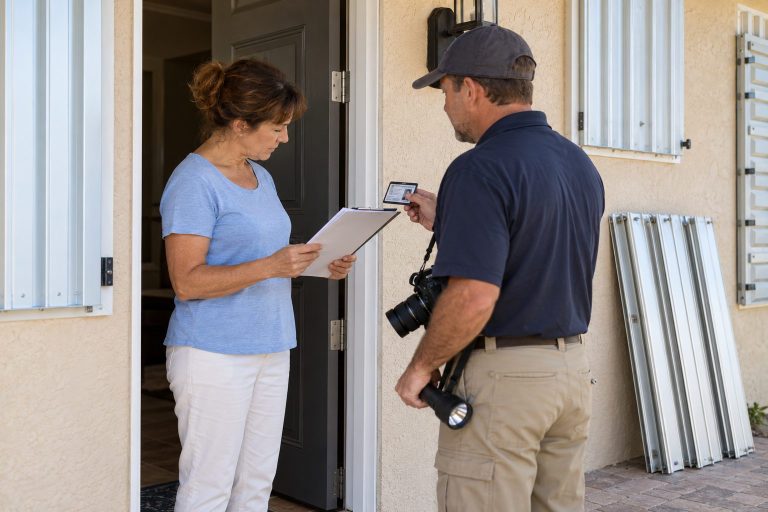
Queensland Government’s warning says water bores must be drilled by a licensed driller.[2] Before appointment, request the assigned person’s name, licence number, class and endorsements, then verify with Queensland’s driller-licensing authority whether these cover the proposed work.[1][4]
Permission to take water is not blanket permission to construct a bore. Business Queensland says groundwater take for stock and domestic purposes is permitted throughout Queensland, but separately directs landholders to approval and construction requirements.[1] The water-bore-driller licensing handbook places responsibility for obtaining development approval before drilling on the landholder.[4]
Establish which approvals apply to the property and intended use before authorising work. Ingham says it checks permits and water rules with customers; that assistance does not replace the landholder’s responsibility stated in the handbook.[4][6] Business Queensland also flags additional construction requirements for the Great Artesian Basin and coal seam gas areas.[1]
Match depth, casing and testing assumptions
Give both contractors the same written scope. Ingham says its individual quotes depend on depth, bore size and casing, development time and property location.[6]
Queensland’s March 2006 Drilling for water fact sheet provides a historical planning checklist—not current approval rules—for defining water needs, likely depth, site and bore design.[7] Use it to prepare requested quote terms rather than assuming standard inclusions:
- Water needs and site: specify intended use, required water quantity and quality, proposed site and rig-access constraints.[7]
- Construction: request matching depth assumptions, bore diameter, casing size and material, drilling method and development scope.[5][6][7]
- Testing: request yield and water-quality testing, test duration, results to be supplied and acceptance criteria tied to the intended use.[7]
- Restoration: ask each contractor to itemise waste removal, clean-up and reinstatement; Ingham advertises waste containment and site clean-up.[6]
Keep estimated drilling depth separate from the contractual depth or spending limit. Set extra-depth authorisation and stopping authority before work begins.
Agree dry-hole charges and stopping authority
Ingham says mobilisation is quoted upfront; request the amount in the written offer.[6] The historical government checklist supports separately agreeing dry-hole and completed-bore charges as planning advice, not a current statutory contract rule.[7]
Ask both contractors to put these terms in writing:
- Itemised charges: per-metre or other charging basis, mobilisation and demobilisation, casing, development, testing, standby costs and GST treatment.
- A stopping point: a depth or expenditure ceiling, who decides when drilling stops, and who can authorise an extension. Require written approval before exceeding the agreed limit.
- Two payment outcomes: amounts payable for an unsuccessful hole and a completed bore, plus any refund entitlement.
- Unsuccessful-hole closure: responsibility and cost for sealing, decommissioning or rehabilitation.
- A definition of “completed”: whether payment depends on an agreed yield or water-quality outcome.
These are terms to negotiate, not assumed protections. Keep them alongside the construction specification so a cheaper rate does not obscure a different scope or open-ended liability.
Specify records and water evidence at handover
Make handover documents part of the agreement. Request:
- The bore log: final depth, strata encountered, construction and casing details, and recorded supply obtained—the details identified in the historical government guide.[7]
- Test results: water-quantity and quality evidence, with methods and testing scope agreed beforehand.[7]
- An owner copy and delivery date: the historical guide recommends owners receive and retain drilling records.[7]
Ingham says it completes and lodges the drilling log.[6] Ask both contractors to specify delivery of the log to you, and ask QLD Drilling whether it lodges the log as well.[6][7] Queensland’s bore-assessment guideline allows recorded capacity in drillers’ records to support historical capacity comparisons when other historical information is unavailable.[3]
The historical government guide recommends complete water analysis before equipping a bore, warning that taste and conductivity indicate rather than establish suitability.[7] Require evidence appropriate to the intended use rather than accepting a yield figure as proof of potable water.
Separate the bore from the pump system
QLD Drilling advertises pump installation; Ingham advertises pumps for some commercial and industrial applications.[5][6] Ask whether these services are included in the particular quote.
Request separate scope lines for pump supply and installation, electrical work, controls, pipework, treatment, commissioning and demonstration of the agreed operating outcome. Identify who coordinates each component and supplies its records.
Keep drilling completion, tested water suitability and operational pump-system acceptance as separate milestones. Define the evidence required at each stage rather than allowing “completed bore” to stand for a working water supply.
What to confirm with each provider
Ingham Drilling lists a $179 Bore Snapshot and a $399 Full report under its Pre-Purchase Bore Report service.[6] Neither provider’s cited page states drilling rates, extra-depth or dry-hole amounts, unsuccessful-hole closure liabilities, payment conditions tied to usable water, detailed customer handover or commissioning requirements, deposits, payment stages, quote validity, cancellation terms or warranties.[5][6]
- Coverage and licensing: written acceptance of the property location and verification of the assigned driller’s class and endorsements.
- Approvals and scope: applicable requirements, matching construction assumptions and agreed testing criteria.
- Cost exposure: itemised prices, an authorisation limit, dry-hole payment and closure responsibilities.
- Contract and handover: payment and cancellation terms, warranties, records, delivery dates and pump-system boundaries.
Choose on the complete written offer. Resolve unclear endorsements, unlimited extra-depth authority, undefined dry-hole costs or unspecified handover before signing.
References
- Water bore drilling in Queensland | Business Queensland (qld.gov.au)
- Digging deep: Landholders urged to stay above board with new bores | Local Government, Water and Volunteers (qld.gov.au)
- Guideline Bore assessments (qld.gov.au)
- rdmw.qld.gov.au Water bore driller’s licensing handbook WSS/2016/3440 (qld.gov.au)
- QLD DRILLING – Queensland Waterbore Drilling (qldrilling.com.au)
- Services – Ingham Drilling (inghamdrilling.com.au)
- Natural Resources and Water Managing Queensland's natural resources …fr (scienceqld.org)