HROUS
How to Choose Coating Inspection Services for US Asset Owners
Choose independent coating inspection services by requiring a specification-linked inspection plan, traceable acceptance records, and explicit access and reinspection costs. Separate the core preparation, environmental, application, and reporting scope from adhesion or holiday tests included only where specified. [5][6]
Define owner QA separately from applicator QC
Identify whose interests the inspector represents. KTA, which offers nationwide US and international coverage, distinguishes owner quality assurance (QA)—checking contractor QC against the specification—from contractor-side quality control (QC). [4] Name the inspector’s client, who receives findings, and who can authorize release or resolve deviations. Agree on named personnel and written escalation arrangements before work begins. [5][6]
Send bidders the coating specification, applicable product data, proposed inspection stages, required records, and assumptions about access and reinspection. Specification review, material controls, and an owner-aligned inspection plan are among the duties described by Phoenix, Arizona-based Industrial Inspection Group; it does not state a geographic service boundary. [6]
Request named inspectors, relevant qualifications, experience with the specified coating system and test methods, availability, and substitution arrangements. ATS describes certified inspectors performing and recording defined coating checks; use those credentials as supporting qualifications, not a substitute for the project-specific scope. [3][5]
Build a specification-linked inspection plan
Use the following owner-created steel-tank checklist to organize proposals. Its fields are an editorial example, not a universal procedure or provider package. Record the project-specific details before approval; the inspection sequence draws on published material, preparation, application, testing, and corrective-action checks. [5][6]
- Material receipt: Identify the storage location and tank, applicable specification clause and revision, document and storage checks and their frequency, and approved product data for acceptance. Record product, component and thinner batches and condition, and name the owner representative responsible for release and escalation.
- Preparation and pre-primer release: Identify the tank area, applicable specification clause and revision, preparation and environmental checks and their frequency, and specified acceptance limits. Record results and hold-point signoff, and name the inspector or owner engineer responsible for release and escalation.
- Application and recoat: Identify the area and coat, applicable specification clause and revision, mixing, conditions, WFT/DFT and recoat checks and their frequency, and specified acceptance limits and windows. Keep an application log and results, and name the inspector or owner engineer responsible for release and escalation.
- Specified final tests: Identify the test area, applicable specification clause and revision, required DFT, adhesion or holiday testing and its frequency, and specified acceptance criteria. Map the results and name the acceptance authority responsible for release and escalation.
- Repair verification: Identify the repair, applicable specification clause and revision, approved repair checks and retests and their frequency, and repair acceptance criteria. Record the defect, corrective action and reinspection, and name the inspector or owner engineer responsible for release and escalation.
- Closeout: Identify the tanks and areas in a register, applicable specification clauses and revisions, and file-review and completeness requirements. Confirm required deliverables and resolved deviations, assemble the acceptance file, and name the owner signatory responsible for release and escalation.
Have the owner approve responsibilities and release authority before work begins, including the written route for deviations rather than informal field overrides. [5]
Set preparation and environmental hold points
Make preparation a release-before-primer hold point. Identify the areas inspected and required checks for cleanliness, surface profile, soluble salts and dust, including edges, welds, fasteners and difficult-to-access locations. Specify which results require acceptance before priming and how the permitted preparation-to-priming interval will be tracked. [5][6]
For each work area, require ambient temperature, surface temperature, relative humidity and dew-point readings before release, followed by readings during application at specified intervals. Put applicable limits and stop-work triggers from the project specification or coating manufacturer’s requirements into the plan rather than assuming universal thresholds. Include storage temperature and humidity, material shelf life and batch checks where applicable. [5][6]
Use a written release workflow: the inspector records results and reports deviations; the named owner or engineer decides their disposition; and the escalation contact receives unresolved issues after the agreed response window. Require written authorization for departures, corrective-action documentation and reinspection before affected work resumes—not a verbal override or an inspector’s unilateral specification change. [5]
Specify coating measurements and conditional tests
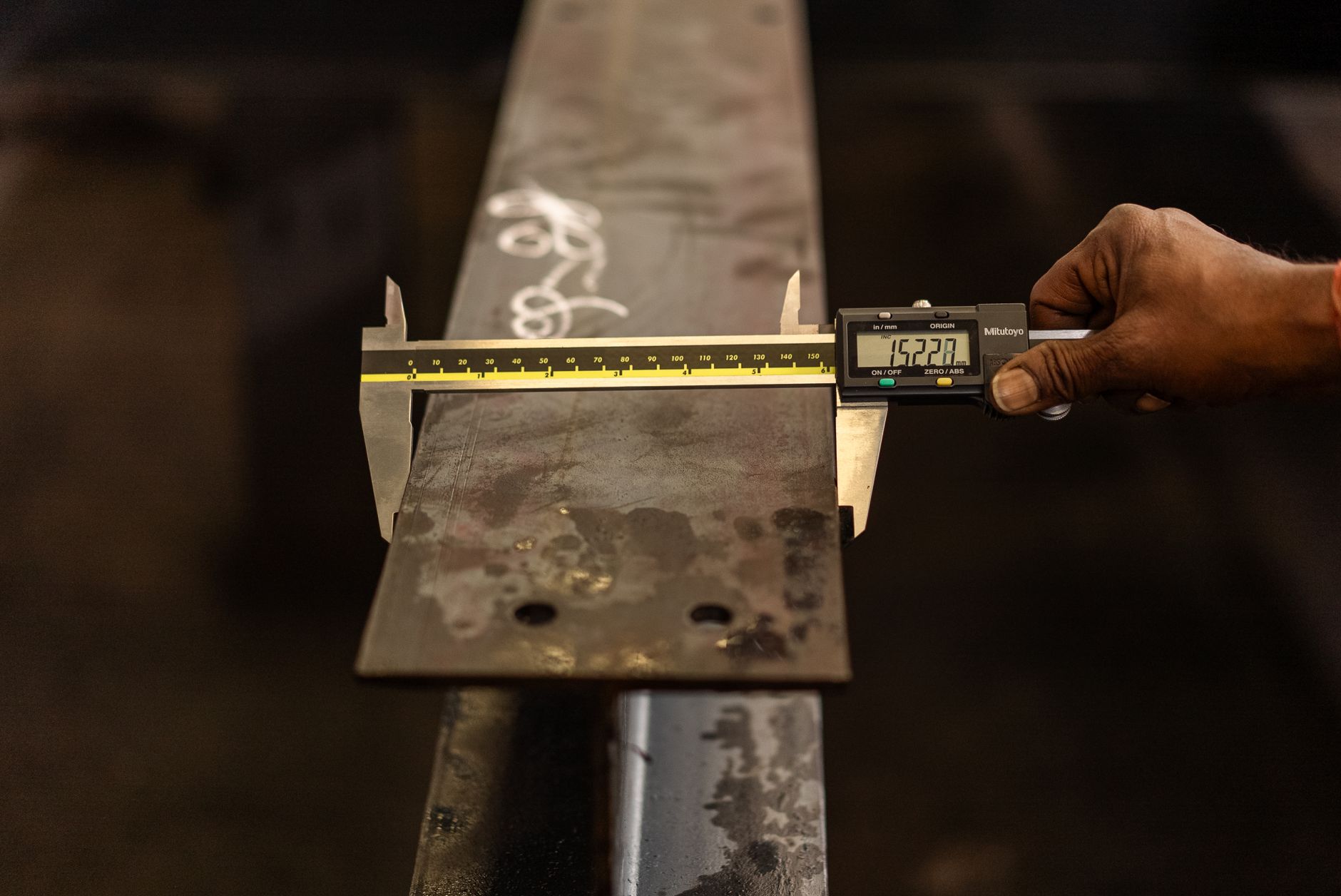
Wet-film thickness (WFT) gives immediate feedback after application; dry-film thickness (DFT) is measured after drying or curing to check compliance with the project specification. Ask the proposal to explain when each measurement will occur, rather than merely listing both services. [1]
For each coat, identify the inspection location, test method, sampling requirement, acceptance range, and applicable recoat or cure condition. Establish the numerical limits and sampling requirements in the specification rather than leaving bidders to assume them. Include applicable checks on mixing proportions, thinner type and amount, induction time, stripe coats, and minimum and maximum recoat intervals. [5][6]
Make adhesion and holiday testing conditional on the specification. Holiday testing uses an electrical circuit to locate coating discontinuities such as pinholes, voids and film breaks. Where adhesion or holiday testing is specified, require the proposal to identify locations, timing, method and acceptance criteria. [1][6]
Ask bidders to name suitable instruments and the governing test-method edition. ATS publishes WFT, DFT, surface-profile, environmental, holiday and adhesion capabilities, and lists digital, mechanical and ultrasonic DFT gauges. [1][2][3] Confirm the applicable standard edition rather than automatically adopting an older edition listed on a provider page. [1][3] ATS’s forms accept US and international inquiries; confirm availability at the actual project site. [1][2]
Require a traceable acceptance file
Require each result to identify the work it supports—not just the test performed. Link daily reports and material records to measurements, deviations and repair closure. [5][6] Put this checklist in the inspection scope:
- Identify the work: Require project, asset, inspected location, date, coating system and coat, and applicable specification revision on linked records. Connect these identifiers to product identification, coating-component and thinner batch numbers, and storage records. [5][6]
- Attach the inspection sequence: For the same location and coat, link environmental readings, preparation results, mixing and application checks, WFT, DFT and other specified test results. Record acceptance criteria alongside findings. [5][6]
- Preserve supporting evidence: Link product-data and certificate logs, inspector documentation, and equipment-calibration records required by the agreed scope. Include these references in daily reports and the final closeout file. [5][6]
- Close exceptions: Connect written nonconformances and signed, approved deviations to affected locations, corrective-action records, repairs and reinspection results before accepting affected work. [5]
Fictional example: Carry “Tank Cedar—North Shell” through the preparation report, environmental log, primer batch record, application checks and thickness results. If a repair is needed, retain that identifier on the nonconformance, mark the repair area, and link corrective-action and reinspection records to closure.
Before hiring, request an anonymized sample report and check whether you can follow that chain. Specify report-delivery deadlines, electronic format, retention period and final sign-off responsibilities as contract deliverables.
Price access, repairs and return visits
Put access responsibilities beside inspection deliverables, not behind a general “access by others” assumption. Industrial Inspection Group’s guidance calls for checking difficult-to-access areas and referring inaccessible locations to the owner for resolution. [6] Require the quote to address:
- Covered locations: List areas, difficult-access assumptions and exclusions; name who identifies access problems before preparation. [6]
- Access arrangements: Assign site coordination, containment, access-equipment supply and responsibility for making locations ready for inspection. [5][6]
- Inaccessible areas: State how the inspector reports them and name the owner representative authorized to resolve the inspection arrangement. [6]
A suitable instrument is not a physical-access plan. ATS describes ultrasonic gauges suitable for hard-to-reach surfaces; ask separately who supplies equipment needed to reach those surfaces. [2]
Request separate prices—or explicit inclusion—for mobilization, access-related standby, repair verification and return visits. Define how many reinspections are included, what triggers another charge, and who authorizes it.
For repairs, identify the defect location, document corrective work, repeat applicable specification-linked checks, and record closure before release. This follows the corrective-action and reinspection sequence described by Central Florida applicator Southern Sandblasting and Painting, whose services include preparation and coating application rather than independent inspection. [5]
Get commercial and staffing commitments in writing
Ask ATS, KTA and Industrial Inspection Group to confirm inspection dollar rates, minimum contract terms, payment schedules, and cancellation and refund policies in writing. [2][4][6] ATS offers a free quote for DFT testing; its form offers standard or expedited service and asks for the desired completion time—not a promise of free inspection. [2]
Ask each bidder to include:
- Charging basis: Hourly, daily, fixed-scope or another basis; minimum billable commitment; and travel, mobilization, standby, overtime and expedited-work charges.
- Schedule: Expected inspection duration, assumed work availability, and how unavailable work or access affects billing and completion.
- Changes: Who authorizes added scope or costs, how approval is documented, and rescheduling, cancellation and refund terms.
- Protections: Payment milestones, insurance evidence showing coverage and limits, and any offered inspection warranty or remedy, including duration, exclusions and claim procedure.
- Staffing: The site served, travel arrangements, field attendance, reporting support, substitutions and any subcontracted inspection work.
Before signing, attach the agreed inspection plan, acceptance-record checklist and priced assumptions to the engagement documents. Return omissions for clarification rather than assuming an unpriced task or return visit is included.
References
- Coating Inspection Services – Applied Technical Services (atslab.com)
- Dry Film Thickness Testing – Applied Technical Services (atslab.com)
- NACE Coating Inspector – Applied Technical Services (atslab.com)
- Coating Inspection Services (kta.com)
- What Experienced Contractors Deliver for Industrial Infrastructure (southernsandblastingandpainting.com)
- Setting Expectations: Responsibilities of QP5 Coating Inspectors (indinspect.com)