HROUS
How to Choose Boat Lift Installation for US Waterfront Owners
Choose boat lift installation by comparing written proposals for the actual loaded boat, site work and operating handover—not the equipment price alone. The cited pages for Anderson Dock and Lift, Trident Marine Construction and Atlantic Harbor Marine Construction do not state installed prices; request itemized quotes covering the complete project. These installers are Florida examples, not nationwide service options. [1][2][6]
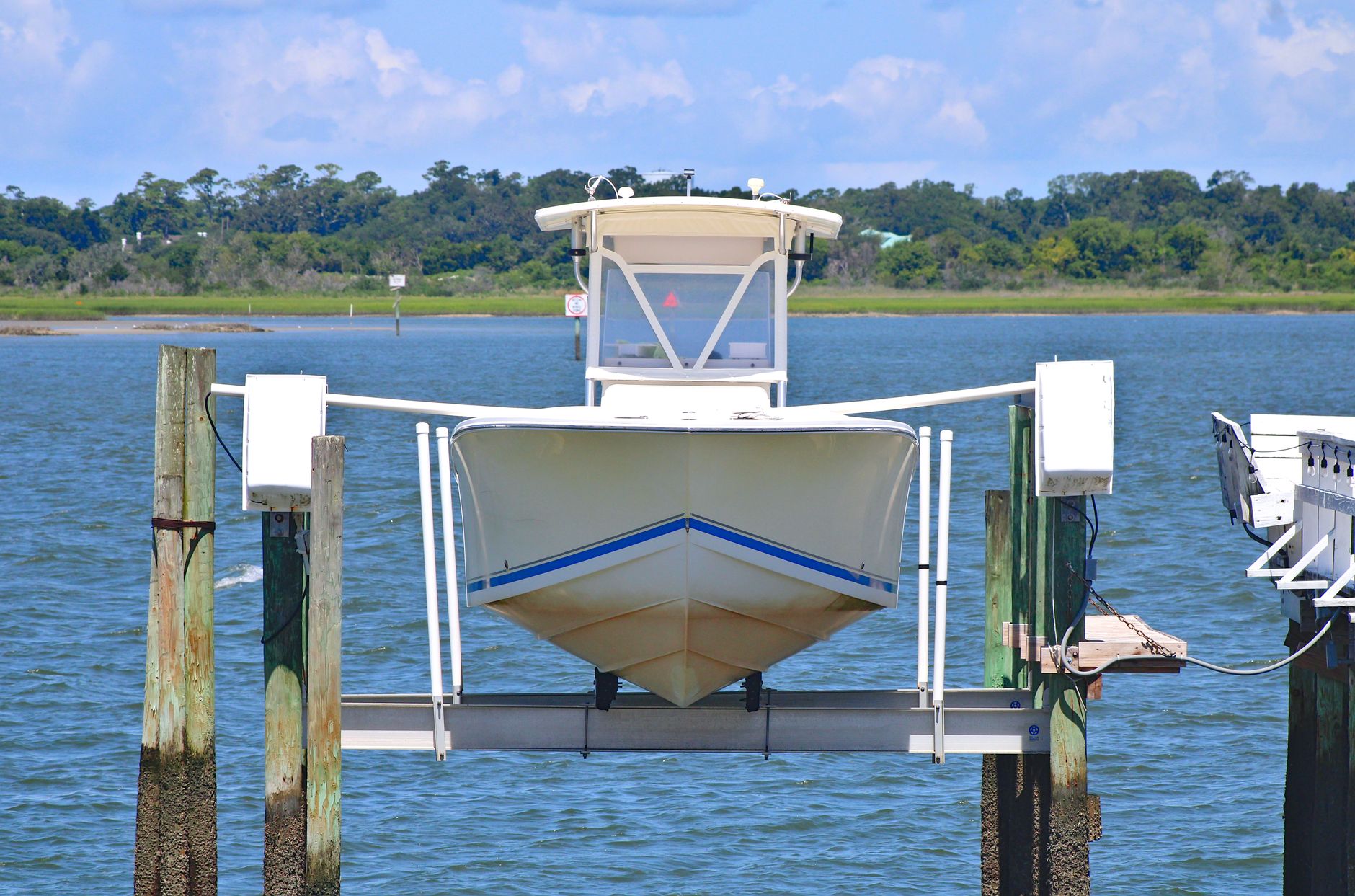
Document the loaded vessel before selecting equipment
Give every bidder the same boat-and-site specification. Anderson Dock and Lift, which installs in Florida’s Manatee and Sarasota counties, says its selection process considers loaded weight and what the existing structure can carry. Its calculation includes dry weight, fuel, water, batteries and permanently carried gear rather than relying on hull length or dry weight alone. [1]
- Vessel details: Record loaded operating weight and its source inputs, overall length, beam, draft, air draft, hull or pontoon-tube configuration, propulsion and fixed accessories. Include equipment above the basic boat configuration, such as a hardtop, antennas or tower. [1][4]
- Equipment match: Ask the installer to identify the exact model and obtain manufacturer-approved capacity and support requirements, including bunk placement, frame clearances and lift travel. A capacity rating alone does not establish compatibility. [4][5]
- Site findings: Request dock condition, piling layout and condition, applicable seawall considerations, usable slip width, launch depth, lowering travel and wind, wake and current exposure. Have the responsible professionals determine structural adequacy and necessary design. [1][4][6]
Check depth and clearance for the vessel and its route. Seaside Luxe’s Florida Gulf Coast compatibility guidance says there is no universal minimum depth and considers bridges and other route constraints. Its Dock-to-Deck Review is a waterfront-compatibility service, not lift installation or a substitute for engineering inspections, depth surveys or permitting determinations. [4]
Separate equipment from the installed project price
Request the same written scope from every bidder, with each item marked included, excluded, optional or awaiting site findings. FLOE, a manufacturer working through dealers rather than a direct installation-service alternative, recommends comparing complete configurations instead of frame prices. [5]
Use these lines to organize each proposal:
- Lift equipment: Exact manufacturer, model, frame and configuration. [5]
- Drive, bunks and controls: Identify the selected components separately. [1][5]
- Canopy and accessories: Distinguish included equipment from optional additions. [5]
- Structural work: Pilings, dock reinforcement and seawall work, including items awaiting assessment. [1][6]
- Delivery, assembly and anchoring: Separate these services from equipment. [5]
- Electrical connection: Define the connection scope and any service upgrades. [6]
- Permitting and taxes: Show their treatment in the total. [5]
- Seasonal services: Separate installation, removal and storage charges where applicable. [5]
For each line, record who supplies it, who performs it and its quoted amount or pricing basis. Ask how unpriced site discoveries will be documented, priced and authorized before additional work proceeds.
Anderson says it provides a written scope and price, with free estimates within 24 business hours. That is an estimate-turnaround commitment, not an installation-availability promise. [1]
Assign structural and electrical responsibilities
For each proposed piling replacement, dock reinforcement or seawall repair, request a written site finding, responsible contractor and defined scope—not simply an “upgrade” allowance. Anderson says existing pilings may need assessment or replacement and high-capacity systems may need load-bearing pilings. [1]
Ask who supplies design documentation, confirms the selected lift’s support requirements and signs off on completed structural work. Specify the inspection and design deliverables in the proposal rather than assuming a site visit includes them.
Treat electrical work as a separate responsibility. As a South Florida example, Atlantic Harbor says it assesses existing electrical service and GFCI protection and coordinates licensed marine electricians for weather-resistant power systems. Ask your bidder to specify the assessment, connection or upgrades, electrician, approvals, exclusions and cost. [6]
Request contractor-license and insurance documentation. Anderson reports Florida Certified Specialty Contractor license SCC131152520 and full insurance; verify those vendor-reported credentials rather than treating them as an independent endorsement. [1]
Assign approvals and verify issuance
Put approval responsibilities in the agreement, not simply “permitting included.” Anderson says it files the permit; ask which approvals that commitment covers for the proposed work. Find Attorneys’ general legal guide recommends confirming contractual responsibility and verifying issuance. [1][3]
Build an approval checklist with the installer, then confirm applicable requirements with the relevant authorities. Record: [3]
- Authority and submission: Who reviews the work and what application documents or plans they need. [3]
- Responsibility: Who applies, supplies supporting documents and pays fees. [3]
- Status and proof: Whether approval is pending or issued, and which documents you will receive. [3]
Find Attorneys identifies potential federal review involving structures or work affecting navigable waters and, separately, dredged or fill material. It also advises checking state, local, shoreline, HOA and deed approvals rather than relying on federal authorization alone. Use those categories as questions for the applicable authorities, not as a jurisdictional determination for your property. [3]
Before the work covered by an approval begins, verify issuance and whether the approved scope includes the proposed piling, dock or shoreline changes. Keep approvals, plans and inspection records—not merely confirmation an application was submitted. [3]
Separate estimate, permit and installation schedules
Ask for distinct milestones rather than one projected completion date:
- Permits: Anderson gives a general range of two to three months where permits are required; treat this as its planning guidance, not a guaranteed project schedule. [1]
- Equipment and site readiness: Ask when equipment will be available and how access, shoreline and bottom conditions, approvals or owner-requested changes could affect scheduling. [3][5][6]
- Installation and acceptance: Request an installation window, completion target and acceptance milestone. Propose payment timing tied to defined deliverables.
Anderson also advertises financing for qualified residential clients, subject to credit approval. Request the rate, fees, repayment schedule and treatment of cancellation or scope changes before committing. [1]
Define handover before signing
Agree who attends handover, what will be demonstrated, which documents you receive and how unfinished items will be closed out. Treat a witnessed operating demonstration and written acceptance checklist as contractual requests, not an implied commissioning package.
- Installation readiness: Request confirmation of positioning, leveling, anchoring, adjustment and first-use preparation where applicable. FLOE’s manufacturer guidance supports these topics; it is not a direct installer commitment. [5]
- Operation: Ask for a demonstration of agreed functions and an explanation of operating limits, emergency procedures and when to stop using the lift. Define the demonstration rather than assuming a formal load test. [1][5]
- Documents: Request the owner manual, equipment identification, maintenance schedule, exact-equipment warranties and local service contacts. Keep approvals and inspection records with that package. [3][5]
- Outstanding work: Propose a written list naming each unresolved item, responsible party, correction deadline and method of confirming completion.
Distinguish owner upkeep from service and warranty support
Request written warranties for the exact lift, drive, canopy and accessories, plus a separate explanation of installation workmanship coverage. FLOE says its applicable limited warranties vary by product, component and use. [5]
- Coverage: Check parts versus labor, structural coverage, prorated benefits, exclusions and transferability. [5]
- Claim costs: Identify travel, mileage or freight charges and who diagnoses problems, sources parts and submits claims. [5]
- Maintenance: Assign owner checks, rinsing, lubrication, wear-component service, dealer-only procedures and annual or seasonal work, with equipment-specific intervals and warranty-preserving requirements. [1][2][5]
Anderson advises rinsing after saltwater use and checking cables; it also offers inspections and cable, motor, drive and cradle repairs. These owner tasks are examples, not a complete maintenance schedule for every lift. [1]
For a regional service example, Trident Marine Construction offers yearly lift maintenance. Its contact form lists Hillsborough, Manatee, Pinellas, Pasco and Polk counties in Florida. Request the maintenance scope and price separately from installation. [2]
A service offering is not a commitment to manage warranty claims. FLOE says dealer support varies, so name the local repair and claims contacts in the agreement. [5]
What to confirm with each provider
The cited installer pages leave contract and acceptance details unresolved: Anderson, Trident and Atlantic Harbor do not state deposit amounts, payment milestones, cancellation or refund terms, installation durations, exact warranty terms or a formal commissioning and acceptance protocol. [1][2][6]
- Financial terms: Proposal validity, deposit, payment milestones, change-order authorization, cancellation deadlines, fees and refunds.
- Technical deliverables: Site-assessment records, inspection methods and project-specific engineering documentation.
- Completion: Installation window, agreed demonstration, acceptance process, training and callback commitment.
- Ongoing support: Maintenance price, workmanship coverage, local parts, repair response expectations and responsibility for claims.
Return unresolved exclusions and assumptions for written clarification before choosing. The decision should rest on documented vessel and site fit, a complete installed price, assigned approval responsibilities and an agreed handover and support package—not the headline equipment price. [3][5]
References
- Boat Lift Installation and Repair | Bradenton and Sarasota (andersondockandlift.com)
- Boat Lifts | Trident Marine Construction (tridenth2o.com)
- Navigating Waterfront Construction: Legal, Permitting, and Liability Essentials for Docks, Piers, and Boat Slips – Find Attorneys (findattorneys.org, 2026)
- Is Your Florida Waterfront Home Boat-Ready? | Seaside Luxe (waterfrontyachthomes.com)
- Comparing Boat Lift & Dock Manufacturers: What Buyers Should Know (floeintl.com)
- Is Your Property Boat Lift Ready? How to Assess if Your Site Is Suitable for a Boat Lift (atlanticharbormarineconstruction.com)