HROUS
Metal Stamping for Canadian Buyers: How to Assess Tooling and Approval
Compare metal stamping suppliers for a Canadian program using the same part specification, trial evidence and total cost. Two Ontario businesses provide a starting point for enquiries: Trim Stamping in Pickering and Prototier-1 in Beeton.[1][2] Their own capability pages establish a Canadian operating location and stated services; they do not establish price, availability or suitability for your drawing.

Two Canadian suppliers to assess
Trim Stamping, Pickering, Ontario
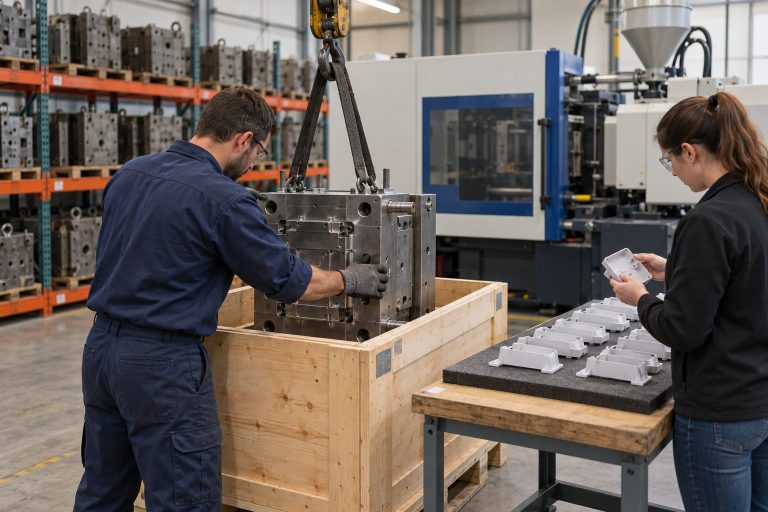
Trim Stamping describes in-house tool and die design and construction, together with modification, repair and maintenance of existing or customer-supplied tooling.[1] This makes it a relevant enquiry where a program involves a new die or continued support for an existing tool. Send the controlled drawing and tool history, then ask which operations, materials, tolerances and production volumes it will quote. Confirm whether work takes place at the quoted Canadian facility and how delivery to your province is handled.
Prototier-1, Beeton, Ontario
Prototier-1 describes metal stamping and forming with in-house tool design and build, prototype-to-production support, forming simulation and dimensional verification using coordinate measuring equipment. Its page identifies steel, stainless steel and aluminium among the materials it works with, and describes first-article checking before production.[2] Ask which press, tooling route and inspection plan would be proposed for your particular part. A general capability statement is not evidence that a specified tolerance has already been demonstrated on your geometry.
These are supplier-reported examples, not an independent ranking or an exhaustive Canadian directory. Obtain comparable written responses before selecting either business.
Give every bidder the same RFQ baseline
Prepare one controlled request for quotation (RFQ), then log differences in assumptions rather than comparing the lowest headline piece price. Fabcon’s manufacturing guide also frames supplier selection around total program cost.[3] Use this buyer-defined enquiry checklist:
- Geometry: provide the controlled 2D drawing, 3D model where available, revision, datum scheme and critical dimensions.
- Material: specify grade, temper, thickness, coating, finish and any required material certification.
- Production: state annual volume, batch size, ramp-up, expected program life and secondary operations.
- Delivery: identify the Canadian destination, packaging, traceability, delivery schedule and required inspection documents.
- Open decisions: ask each bidder to list deviations, exclusions, unresolved tolerances and any proposed drawing changes.
Ask for an explanation of forming risk for the actual material and geometry, including springback and critical formed features. Prototier-1’s published simulation capability is a useful enquiry point, not a guarantee that every part can be made without revision.[2] Agree who may approve a design change before the supplier modifies the drawing or tool.
Separate the tool, trial-part and production decisions
Use three approval records as a purchasing framework. They are proposed contract controls, not mandatory Canadian acceptance standards:
- Tool acceptance: identify the die, scope, drawing revision, trial material, trial quantity and documentation supplied. Record open corrections and who can authorise further work.
- Trial-part validation: link each sample set to the part revision, stock specification and inspection results. Record deviations and whether acceptance is conditional on correction.
- Repeat-production release: confirm the actual production arrangement, inspection plan, correction closure and person authorised to release repeat orders. An accepted sample does not, by itself, prove continuing output will remain acceptable.
Agree quantities, acceptance criteria and signatories before trials. Where the customer requires first articles, a production part approval process or capability evidence, put the required documents and criteria into the order rather than assuming a supplier’s general quality statement includes them.
Put ownership, maintenance and transfer into the order
Trim’s advertised support for customer-supplied and existing tools makes maintenance scope worth discussing explicitly.[1] Ask who owns the die, inserts, fixtures and technical files; who stores and insures them; and which deliverables can be transferred to another press shop. Payment for tooling should not be treated as proof of every ownership or access right.
Request separate terms for scheduled maintenance, normal wear, accidental damage, spare components, engineering changes and recommissioning after transfer. Have a prospective receiving shop review the proposed transfer package and press compatibility before committing to a move. These are negotiated responsibilities, not promises established by the suppliers’ public pages.
Also settle coil purchasing, customer-supplied material rules, minimum purchases, leftover stock, scrap ownership or credit, and material-price adjustments. Record who pays if supplied material fails the agreed specification and how disputed inspection results are resolved.
Compare total program cost at the same volumes
Fabcon distinguishes tooling investment from recurring production costs and recommends evaluating the program as a whole.[3] Build a worksheet with separate lines for engineering, die design and build, trials, authorised corrections, production, secondary operations, inspection, packing, freight, maintenance and transfer support. Avoid adding material again if it is already included in the piece price.
Ask for prices at the same forecast volumes and order pattern. State the currency, taxes, payment milestones, quote validity and any price-adjustment mechanism. For a supplier outside Canada, add applicable border, currency and transport costs before comparing it with an Ontario quotation; a US supplier’s published guide does not establish Canadian landed cost.
Resolve these points before placing an order
The Canadian capability pages do not settle your tooling price, minimum order, lead time, delivery coverage, warranty, ownership terms or acceptance thresholds.[1][2] Request a dated, project-specific offer identifying the facility, proposed process, inspection evidence, approval gates and complete commercial scope. Choose against the same documented requirement, then keep the approved revision and responsibility record with every repeat order.
References
- Tool & Die – Trim Stamping Inc (trimstamping.com)
- Metal Stamping & Forming – Prototier-1 Inc (prototier.com)
- Custom Metal Stamping Services: 2026 Buyer's Guide – Fabcon (fabcon.com)