HROUS
Plastic Injection Molding: US Buyers’ Tooling and Run Comparison
For US buyers, Protolabs positions Prototype for design iteration and On-Demand for finalized designs needing repeat-run consistency; Protolabs Network offers project-dependent qualification services on request.[1][2] Compare their tooling commitments first, then make production approval depend on agreed evidence and purchasing terms.
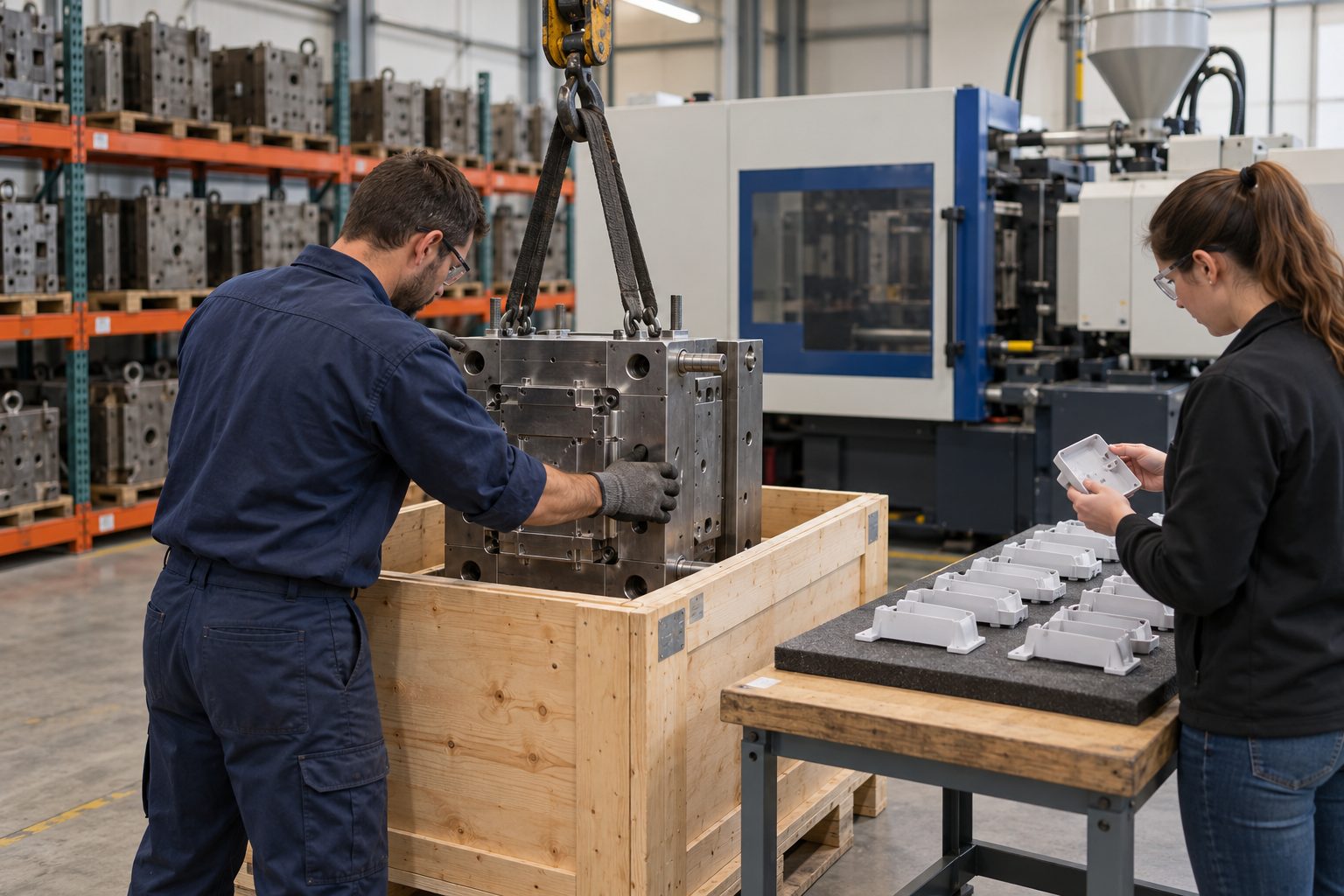
Compare ownership, tool life and inactive storage
Protolabs Prototype
- Ownership: Available on request.[1]
- Tool-life commitment: At least a 2,000-shot guarantee.[1]
- Inactive storage: 18 months.[1]
Protolabs On-Demand
- Ownership: Stated tool ownership.[1]
- Tool-life commitment: Unlimited tool life for the project; Protolabs says it will cut a replacement if the tool wears out.[1]
- Inactive storage: Three years.[1]
Protolabs Network
- Ownership: Customer-owned tooling.[2]
- Tool-life commitment: Unconfirmed on the cited page.[2]
- Inactive storage: Duration unconfirmed on the cited page.[2]
These are provider-published commitments, not independently verified performance findings.[1][2] Keep storage duration separate from storage cost and disposal rights, and ownership separate from permission to transfer the mold.[3][4]
Match the service to the production requirement
- Protolabs Prototype: Positioned for design and material iteration and manufacturability trade-offs, typically below 2,000 units, with single-cavity tooling.[1]
- Protolabs On-Demand: Positioned for finalized designs needing run-to-run consistency, qualification documentation and mold-capability data, with single- or multi-cavity tooling.[1]
- Protolabs Network: Offers PPAP Levels 2 and 3, first-article inspection (FAI), CMM, Cpk, GR&R and IQ/OQ/PQ on request; availability varies by partner and project, so specify requirements at quotation.[2]
Attach a deliverables list to the quote request: required reports, critical-to-quality characteristics (CTQs), inspection methods, sampling frequency and delivered records.[3] Protolabs’ page lists QIR process controls and broader On-Demand documentation without fully clarifying which reports are standard versus added-cost options; request an itemized scope.[1]
Compare quoted costs, not the tooling minimum
Protolabs advertises mold costs starting at $1,495, depending on geometry, complexity, lead time and material, and says setup fees apply per run.[1] This is a starting price, not a total production-program cost.
Request comparable written totals for tooling, the first production run and a defined repeat order, using the same part revision, resin, quantity and inspection requirements.[1][3] Separate tooling, parts, per-run setup and inspection/documentation charges, identifying included and separately priced deliverables.[1][2]
Define ownership, upkeep and release before payment
A buyer may own a paid mold while it remains at the manufacturer for production.[4] Put these terms in the tooling agreement before authorizing work:
- Title and custody: When ownership passes, any lien for unpaid invoices, tool location, retention period and notice before disposal.[3][4]
- Upkeep: Responsibility for routine maintenance, normal-wear repairs, misuse damage and engineering revisions.[3]
- Release: Transfer conditions and end-of-project handling; for tooling outside the United States, export-document responsibility and a condition report before release.[3][4]
Protolabs Network advertises ongoing mold-maintenance support; confirm its scope and charges rather than treating support as free maintenance.[2]
Set the tooling and first-article baseline
Before authorizing tooling, lock the CAD and drawing revisions, tolerances, CTQs, resin supplier and grade, color/additives and cosmetic limits. Obtain signed acceptance of DFM changes and exceptions.[3][5] Include a mold specification covering cavity count, tool steel, gates, cooling, ejection, finish, expected life and maintenance.[3][5]
Require first-article approval using the intended production resin and process—not an easier-flow substitute.[3][4] Organize the evidence around three decisions:
- Before the trial: Agree on samples from every cavity, cavity-labeled bags linked to the trial record, resin-lot identification, machine and process settings, and disclosure of handwork or non-production settings.[5]
- With the samples: Request dimensional results, applicable fit/function tests and cosmetic checks, including flash, sink, weld lines, gate vestige and warpage.[4] Tie measurements to cavity, resin lot, gauge and inspector; request a process record covering temperatures, injection and hold settings, cooling/cycle times and drying conditions.[3][5]
- At approval: Keep the initial trial (T0), golden-sample approval and production release separate. Record the approved sample, revision, resin, color, cavity, results and limitations, with both parties retaining labeled golden samples or equivalent controlled records.[5]
Control repeat runs and rejected parts
Require advance notice and written approval for resin or colorant changes, process changes, mold repairs, cavity shutdowns, production-site moves, subcontracting and packaging changes.[3][5] Specify repeat-run inspections and records, such as first-piece checks at each startup or tool change, in-process measurements and shipment certificates of conformance where required.[3]
For rejected parts, define who identifies and segregates suspect stock, reports potentially affected shipments, contains the problem and authorizes disposition.[3][5] Agree when rejection, sorting, rework or replacement is appropriate, and allocate those costs, expedited freight and credits according to the contract and verified responsibility.[3][5]
A temporary deviation should identify the affected quantity, condition, risk, approver, expiration and corrective follow-up.[5] Set project-specific acknowledgment and corrective-action deadlines. For systemic defects, specify an 8D or equivalent response covering containment, verified root cause, permanent correction and effectiveness evidence.[5]
What to confirm with each provider
The cited Protolabs and Network pages leave the following commercial details unresolved; obtain written answers before approval.[1][2]
- Network: Tool-life guarantee, inactive-storage duration, individual mold-option prices and setup charges.[2]
- Both: Maintenance/repair prices, inactive-storage fees, disposal notice periods, transfer/release deadlines, transfer/export charges, cancellation rights and refund terms.[1][2]
Use separate approval gates
- Tooling authorization: Confirm the service choice, controlled drawings, accepted DFM changes, resin and mold specification, ownership, storage, maintenance, release terms and itemized costs.[1][3][4][5]
- Production release: Accept cavity-specific samples, dimensional results, process records and documented limitations against the approved revision and material.[3][5]
- Repeat-order approval: Confirm setup charges, change-approval authority, inspection records and rejected-part remedies.[1][3][5]
Hold the relevant approval while a required term or deliverable remains unresolved; a successful trial should not substitute for written production release.[5]
References
- Injection Molding Services for Custom Parts – Protolabs (protolabs.com)
- Plastic Injection Molding Service | Protolabs network (formerly Hubs) | Protolabs Network (hubs.com)
- Injection Molding Quality Agreement: Divide Buyer and Supplier Duties Team Rapid Tooling Articles (teamrapidtooling.com, 2026)
- Injection Mold Tooling Timeline: From Mold Design to First Production Trial (weilan-mfg.com)
- Injection Molding Supplier Checklist Before Tooling Payment (zetarmold.com, 2026)