HROUS
Building Envelope Warranty in BC: New-Home Owners’ Coverage File
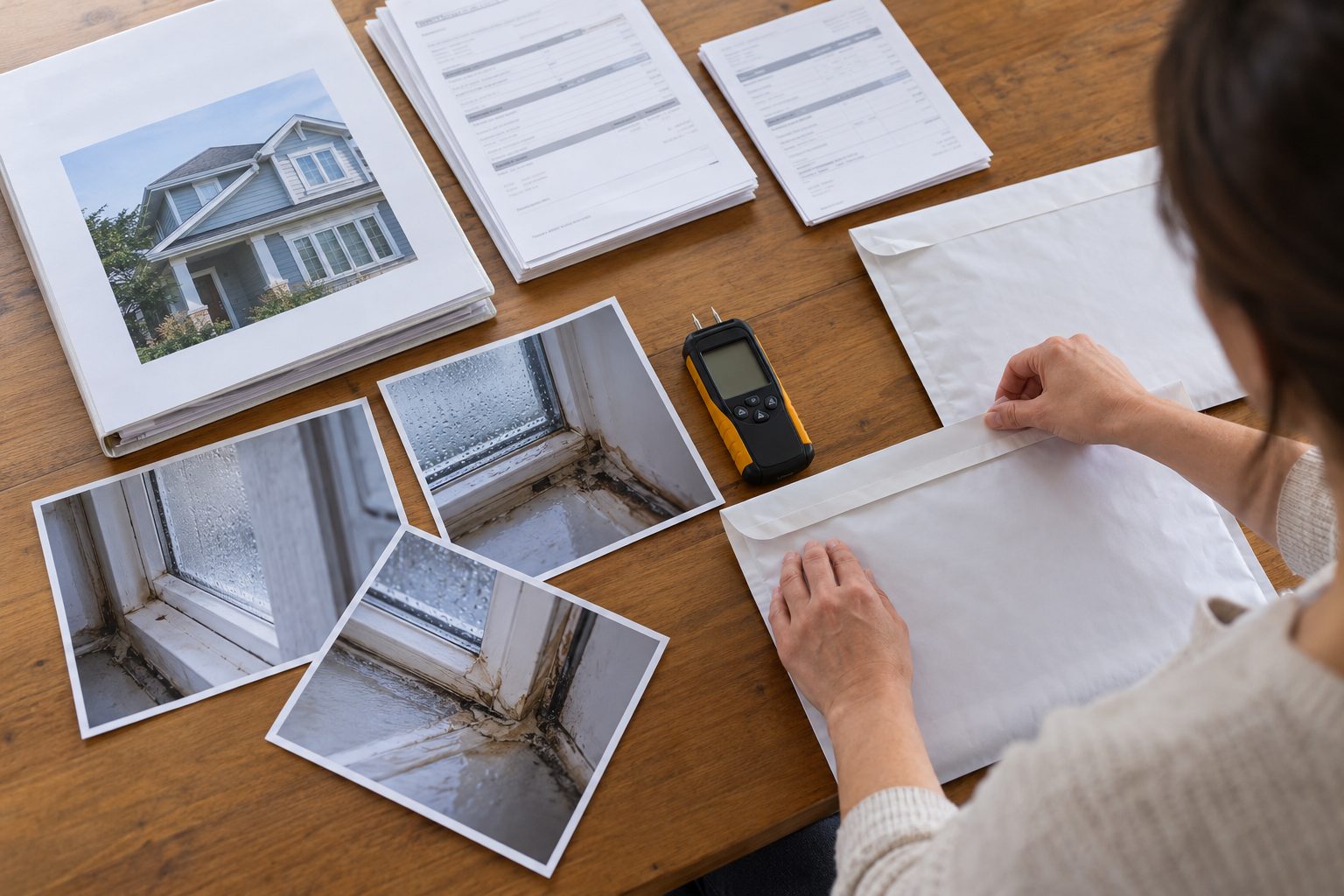
Assemble your policy and coverage dates, written notices describing each suspected defect, delivery records and supporting evidence; retain assessment and repair records as the claim progresses. [1][3][4] The key distinction is required written notice versus recommended supporting evidence:
- Required notice: The Regulation requires written notice to both the warranty provider and residential builder within a reasonable time, giving reasonable detail and particulars of the specific defects claimed. [1] BC Housing says to notify both as soon as possible and before the applicable coverage expires. [3]
- Recommended evidence: ATAC LAW recommends timestamped photographs, a signed professional inspection report and written contractor estimates. These are supporting recommendations, not universal prerequisites established by the official notice guidance. [1][3][4]
Check your provider’s instructions and required forms, but do not postpone timely notice while collecting supporting evidence. Photographs and inspection findings support a claim; the provider assesses coverage under the policy. [3][4]
Verify your policy, provider and dates
Your policy is the legal contract with the warranty provider. Put its policy number, provider and builder contacts, claims procedure, relevant expiry dates, exclusions and coverage limits in your file. [2][3] If the policy is missing, contact the provider; if the builder or provider is unknown, search your property address in BC Housing’s New Homes Registry. [3]
Do not calculate deadlines from your purchase date alone. BC Housing identifies these coverage commencement triggers: [2]
- Custom detached home: Occupancy or the first occupancy permit, whichever occurs first. [2]
- Speculative detached home or strata unit: First occupancy or title transfer, whichever occurs first. [2]
- Strata common property: First-unit occupancy or title transfer, whichever occurs first. [2]
Match the applicable trigger to your policy’s dates. BC Housing explains that coverage stays with the home for the remaining term rather than restarting for a subsequent buyer. [2] If you bought from a previous owner, request the claims history from the provider to identify earlier repairs, coverage already used and protection potentially remaining. [3]
Separate suspected defects from coverage conclusions
BC Housing’s “2-5-10” framework separates materials-and-labour, five-year envelope and structural coverage; it is not blanket ten-year protection. [2] The Regulation defines the envelope as assemblies, components and materials intended to separate and protect the interior from adverse exterior climatic conditions. [1]
The five-year tier includes envelope defects involving unintended water penetration that could cause damage—not every leak automatically qualifies. [2][3] Describe staining, moisture or deterioration as a suspected defect: neither an inspection report nor a builder’s voluntary repair establishes coverage. [3]
BC Housing lists possible exclusions including normal wear and tear, damage caused by others and failure to prevent or minimise damage. It also identifies owner-built homes and other exempt categories, so check whether this insurance framework applies before relying on its coverage periods. [2]
Prepare the notice and evidence file
Your written notice must give reasonable detail and particulars of the specific defects claimed to be covered—not simply say “water damage”. [1] Check the provider’s instructions and any required forms. [3]
Suggested notice checklist—not a prescribed form:
- Property address and policy reference.
- Affected location and an issue number for each suspected defect.
- Observed condition, when it first appeared and subsequent changes.
- Specific suspected defect, separating observations from professional opinion.
- Attachment list, contact details and access arrangements.
For supporting evidence, ATAC LAW recommends timestamped photographs, a signed professional report identifying the suspected defect, its cause and relationship to the exterior assembly, and written contractor estimates. [4] Link each photograph or report excerpt to its location and issue number.
Retain your discovery chronology, notice copies, proof of delivery and correspondence. [3][4] Keep adding requested documents and inspection notes: the provider may request further information during assessment. [3]
Notify both parties and manage immediate damage
Send the written notice to both the warranty provider and builder, retaining copies and delivery records. [1][3][4] BC Housing warns that a builder’s offer to repair without written notice to the provider is not a formal claim; coverage may expire while you wait for the repair. [3]
For strata properties, BC Housing directs owners to report defects inside their units and the strata corporation to report common-property defects. [3] Clarify responsibility promptly rather than assuming someone else has notified the provider.
BC Housing advises taking reasonable steps to prevent worsening damage and consulting the provider before repairs. Work by someone other than the builder or provider may limit the claim; coverage may also be reduced or denied if inaction increases damage. [3]
Track assessment and the decision
Keep a follow-up log alongside the notice file. A useful layout is:
Date; issue reference; sender or recipient; request or event; responsible person; agreed next action and date; status; document link.
BC Housing describes a process in which the provider contacts you to review the claim, requests necessary information and arranges an inspection if needed. Its guidance also calls for reasonable access with advance notice. [3] Record:
- Notice delivery and provider correspondence.
- Document requests and what you supplied.
- Inspection appointments and access arrangements.
- Promised actions, repair dates and explanations for delays.
- Claim decisions and repair records. [3][4]
If an agreed action remains outstanding, follow up in writing for its status and a revised date.
If approved, track repair arrangements. Weather, materials and labour can affect timing, but BC Housing says reliance on the builder should not delay the provider’s responsibility to ensure timely repairs. If denied, retain the written decision, reasons and dispute-resolution information described in BC Housing’s guidance. [3]
Retain the repair record
After repairs, BC Housing says you should receive repair specifications, a letter confirming the completion date and repair-warranty information. Its guidance says warranty repairs or replacements must meet the BC Building Code and industry standards, with materials-and-labour protection lasting until the later of one year after completion or the end of the original coverage period. [3]
Add completion photographs and link each repaired item to its original issue number, coverage decision and repair specifications.
References
- Homeowner Protection Act Regulation (bc.ca, 2026)
- Home Warranty Insurance: What Homeowners Need to Know | BC Housing (bchousing.org)
- Home Warranty Insurance Claims | BC Housing (bchousing.org)
- Building Envelope Warranty Claims in BC | All You Should Know (ataclaw.ca)