For a Canadian warehouse, compare commercial dehumidifier rental offers against an agreed humidity-control objective and the complete service needed to meet it. The equipment, installation, monitoring and collection terms all matter. A daily machine rate does not show whether the package suits the building or stored goods.

Choose a service scope before requesting a rate
Describe whether the job concerns temporary humidity control in an operating warehouse, a planned shutdown or drying after an incident. If an incident also requires contamination assessment or specialist restoration, identify that as a separate professional scope; do not assume an equipment rental includes it.
Aggreko Canada
Published starting point: Aggreko’s Canadian dehumidifier page describes industrial desiccant equipment and engineering and installation support.[1]
What to confirm for your location: The proposed system, performance assumptions, local availability, power requirements and support included in the quote.
Herc Rentals, Canadian offering
Published starting point: Herc’s Canadian page lists refrigerant, low-grain refrigerant and desiccant rental equipment for environmental control and restoration applications.[2]
What to confirm for your location: The available model, suitability for the specific warehouse, serving branch and actual delivery and support arrangement.
These pages establish advertised offerings, not a performance ranking or national availability guarantee. A Canadian product page does not confirm stock at your serving branch on the required date. Ask any provider to accept the location, conditions and duration in writing.
Provide a site brief the supplier can size against
Give the supplier the warehouse dimensions and layout, but also explain the moisture-control problem. Include observed temperature and humidity conditions, outdoor exposure, door-opening patterns, occupied areas, internal moisture sources and any restrictions affecting ducting or equipment placement.
State the stored products and obtain their acceptable conditions from the responsible product or quality team. Ask the supplier to define the proposed operating target, assessment locations and conditions under which its proposal is expected to achieve it. Do not invent a humidity target solely to complete a rental form.
Provide available electrical-service information for professional assessment and identify any site restrictions on fuel, noise, drainage, access or unattended operation. Ask the provider to state the required site services for its selected model and the work needed before the rental can begin.
Compare performance under the same conditions
If suppliers propose refrigerant and desiccant equipment, ask each to provide model-specific performance information at the anticipated operating conditions. Aggreko documents a desiccant offering,[1] but that alone does not make it the correct choice for every warehouse.
Request the supplier’s explanation of the moisture load, proposed unit count, air distribution and expected heat effect. Ask how the design responds if doors remain open longer than assumed or the operating temperature changes.
Do not compare an airflow figure with a water-removal figure as if they describe the same result. Likewise, do not treat floor area alone as a sizing method. The provider should explain the basis of its equipment selection and the limits of the estimate.
Allocate installation and monitoring responsibilities
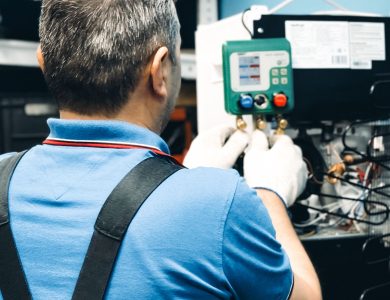
Have the quote identify who delivers and positions equipment, provides any ducts or accessories, arranges the required electrical work and deals with condensate or other system-specific requirements. Ask what the site must prepare before delivery and who checks readiness.
Agree where readings will be taken, how often they will be reviewed and who responds when conditions fall outside the agreed objective. Remote monitoring, if offered, should have a named response owner and an explanation of what is included.
Request an escalation plan for equipment failure, a full collection vessel where applicable, lost power or an unexpected change in conditions. Establish the supplier’s actual service hours and replacement arrangements rather than relying on a general support claim.
Compare the complete rental period in Canadian dollars
Request a CAD quotation for the nominated location and expected dates. Separate equipment rental, accessories, delivery, setup, collection, required professional site work and optional monitoring. Identify applicable taxes, deposits, damage terms and any charges outside the base rental.
Ask when billing starts and stops, whether a minimum period applies, how extensions are authorised and whether a pickup delay affects the charge. Use the same rental period and service scope across offers. This guide does not establish current rates or a lowest-price provider.
For a job with uncertain duration, request the extension rate and notice process before accepting the initial quote. State who can request removal and how the supplier will confirm collection.
Agree the evidence for acceptance and removal
At handover, record the equipment models, installed arrangement, operating instructions, initial readings and support contacts. Have the responsible supplier explain any limits or conditions that would require reassessment.
Agree how the site and supplier will decide that the temporary arrangement has met its objective and can be removed. Keep the monitoring record and any unresolved issues with that decision. Compare offers on the service and evidence they deliver throughout the rental, including the final collection.
References
- Aggreko Canada: Industrial Dehumidifiers (aggreko.com)
- Herc Rentals Canada: Commercial and Industrial Dehumidifier Rentals (hercrentals.com)