For scissor lift hire in Sydney, compare a nominated machine and a complete delivery-to-collection price. A low daily rate is not useful if the machine cannot reach the work area, the planned task exceeds its capacity or the access route prevents delivery.

United Equipment and Power Access both advertise flexible hire periods. United explicitly lists daily, weekly, monthly and project hire; Power Access discusses daily, weekly and monthly arrangements.[1][2] Hire duration alone therefore does not establish an advantage for either supplier.
What the suppliers publish
United Equipment
United’s Sydney page advertises electric, diesel rough-terrain and bi-levelling scissor lifts, with site visits and machine-selection advice.[1] Request the exact model and specification proposed for your site. A category such as rough-terrain or bi-levelling does not establish that a machine is suitable for a particular slope or ground condition.
Power Access
Power Access’s 2026 Sydney hire guide discusses electric, diesel and hybrid machines, hire-period choices and charges beyond the headline rate, including transport and possible waiver, fuel or cleaning costs.[2] Ask which of those charges apply to the nominated machine and have the inclusions itemised in the actual quotation.
These are supplier descriptions, not a fleet-availability check or independent equipment assessment. Confirm the dates, model, condition and substitution terms before reserving a unit.
Give the supplier a site and task brief
- Task: Describe the work, the reach required and any obstruction between the platform and the work point. Distinguish platform height from advertised working height.
- Load: Include the people, tools and materials expected on the platform, subject to the nominated machine’s limits.
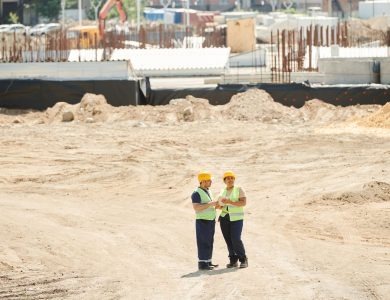
- Route: Supply doorway, gate and turning-space dimensions and identify overhead restrictions, loading access and storage space.
- Environment: State indoor or outdoor use, floor sensitivity, ground conditions, gradients, drainage and nearby traffic or pedestrians.
- Power and attendance: Identify charging or refuelling arrangements, shift length, delivery contact and collection access.
Use photographs and a marked plan where useful, but arrange a competent site assessment when the supplier cannot establish suitability from the brief. Do not accept a larger substitute merely because it offers more height; access, weight, load and operating limitations may differ.
Treat slope claims as model-specific
SafeWork NSW’s platform tip-over guidance identifies terrain, slope, wind loading and manual side forces as considerations in equipment selection and use.[3] Have a competent person assess the intended task against the exact manufacturer’s instructions and site conditions.
A travel gradeability figure is not permission to elevate on that gradient. Ask the supplier to distinguish travel limits from elevated-operation limits in the manufacturer’s documentation. The words all-terrain or self-levelling are not a substitute for that assessment.
This is a purchasing guide. It does not specify an operating procedure, training entitlement or universal licence exemption. Establish operator competence, supervision and applicable requirements before work starts.
Compare total hire cost for the same dates
Request a written schedule covering the base period, minimum charge, weekend treatment, delivery, collection, extensions, late off-hire and cancelled attendance. Identify GST treatment and every proposed damage waiver, excess, cleaning, recharge or refuelling charge.
For an illustrative three-day job that could overrun by two days, request both the planned total and the extended total from each bidder. This is a quotation scenario, not a published market rate. Ask when off-hire takes effect and whether charges continue while the machine awaits collection.
Agree handover, faults and substitutions
Record the nominated machine, delivery condition, supplied instructions, inspection or maintenance documentation and relevant site limitations at handover. Agree how damage is photographed and acknowledged and who receives a fault report.
Specify the supplier’s breakdown contact, response commitment, replacement process and treatment of unusable hire time. Any substitute needs a fresh suitability check for the planned work. Select the quote that meets the assessed task and makes the commercial consequences of delay, faults and collection clear.
References
- United Equipment — Scissor Lift Hire Sydney (unitedequipment.com.au)
- Power Access — Scissor Lift Hire Rates in Sydney, 2026 (poweraccess.com.au)
- SafeWork NSW — Mobile Elevating Platform Tip-Overs, 2020 (nsw.gov.au)