HROUS
Melt Flow Index Testing for Recycled Resin: How US Buyers Should Specify and Order Lab Tests
To get a melt flow result you can act on, tell the lab which measurement to run (MFR or MVR), under which standard (ASTM D1238 or ISO 1133), and at the same temperature and load your supplier’s certificate of analysis (COA) uses [3][4]. For recycled resin, sample the lot under a defined plan, keep a labeled retain for retesting and pair the flow test with a contamination check [3][4]. Applied Technical Services (ATS) and Hoehn Plastics are two US labs that publish melt flow services and show what to confirm before ordering [1][2].

What MFI and MFR measure
Melt flow index (MFI) describes how much molten polymer flows through a capillary at a set temperature and pressure over a 10-minute window. A higher MFI corresponds to a lower molecular weight, which affects tensile strength, viscosity and processing [1].
Melt mass-flow rate (MFR) is another name for melt flow index and is reported in grams per 10 minutes. Melt volume-flow rate (MVR) reports volume instead, so the two should never be copied into each other’s column [4].
The number only means something together with its test conditions. ResinBridge advises testing at the same temperature and load the COA uses, for example 230 °C and 2.16 kg for polypropylene or 300 °C and 1.2 kg for polycarbonate [3]. Two results that look equal are not comparable if one omits its temperature and load [4].
Moisture also changes the reading. Wet PC, PET or nylon can test far higher than the COA because water breaks polymer chains in the barrel, so hygroscopic samples should be dried first [3].
Melt flow is a screening test. Matching flow results do not prove that other properties match [4], and molded parts typically test higher than the pellets they were made from because heat and shear lower the molecular weight [5].
What changes when the resin is recycled
Recycled resin adds three things to plan for on top of the basic test: variation between lots, contamination, and how you sample and keep retains.
Lot-to-lot variation
A COA value is often a snapshot from one point in a production run that may last hours or days, so the sample behind it may not represent the material you received [5]. That is the main reason to verify flow on the delivered lot rather than filing the certificate. Yifuhui’s buyer guide applies the same release logic to virgin and recycled pellets but sets the depth of testing by grade, source history and application [4].
Contamination
ResinBridge’s receiving check is simple: spread pellets on a white tray, compare them with the retain or a color standard, and mold a plaque if needed. Look for foreign pellets, specks, fines or odd colors. If the check fails, quarantine and photograph the material and find out whether the problem affects one package or the whole lot [3]. A visual check cannot rule out hidden contamination, and a single dark speck is an observation, not proof of supplier fault [4]. On filled grades, density or ash testing can reveal the wrong filler level [3].
Sampling and retains
Decide where sample increments come from, whether they stay separate and how much each test needs. Label each sample with lot, location, date and sampler, and record mixed lots separately so one passing sample cannot release unidentified material [4]. Keep a retain of about 1–2 lb (0.5–1 kg) from a freshly opened package of each lot, sealed in a moisture-barrier bag and labeled with grade, color, lot, PO and receipt date [3].
What to put on the test order
Send each lab the same order so reports can be compared:
- Sample identity: your sample ID, producer, full grade, supplier lot and PO number.
- Measurement: MFR or MVR, the standard and revision, temperature, load and units.
- Preparation: whether the sample is as received or dried, and how the lab should condition it.
- Replicates and quantity: how many runs, and how much material to ship.
- Report fields: individual results, test date, any deviations and runs marked invalid.
- Delivery and retests: the agreed report date and how a retest is authorized and charged.
Attach the supplier COA and the purchase specification that sets your acceptance limits. If the limit is blank, resolve it with your quality owner before testing instead of borrowing another grade’s value [4].
Two example labs
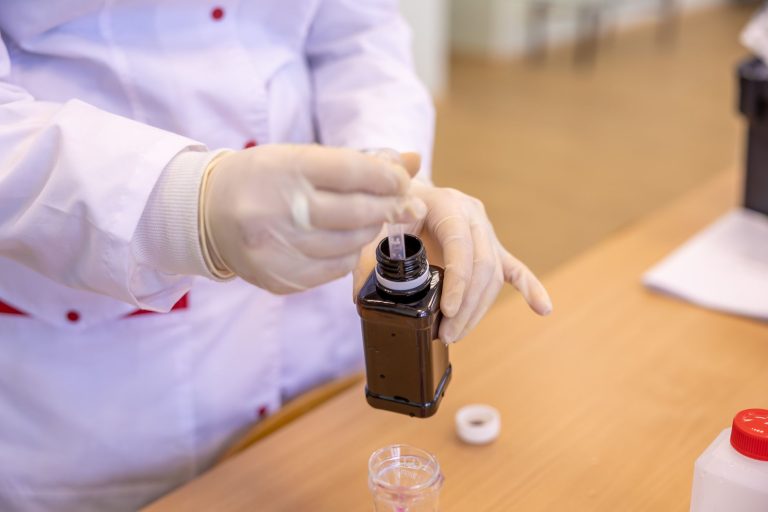
Applied Technical Services tests to ASTM D1238 and states compliance with DIN EN ISO 1133-A, Code T. Its reports cover flow rate (600/t × weight of extrudate), extrudate time in seconds and melt flow rate in g/10 min. ATS describes a nationwide network with ISO/IEC 17025:2017-accredited labs [1].
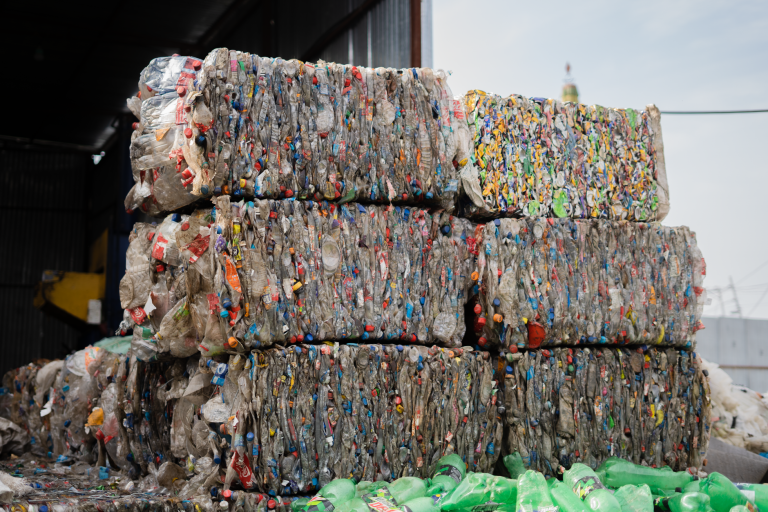
Hoehn Plastics is a Midwest recycler of post-industrial plastic that runs an on-site lab with melt flow indexers, ash testing for fillers, DSC and FT-IR, and it can extrude and mold test samples. The facility is ISO 9001:2015 certified, and Hoehn lists a typical turnaround of 48 hours for lab requests [2].
Neither page lists prices, and Hoehn’s page does not name the standard or conditions it uses, so put both in your quote request. With any lab, ask which site will run the test and check that its accreditation scope covers the method.
Reading results and handling disagreement
The producer’s specification range is the limit that counts. ResinBridge notes that many molders flag results more than about 10–20% away from the COA value because repeatability between labs is wide [3]. Yifuhui rejects any universal percentage band and ties acceptance to the exact grade’s agreed limits under matching conditions [4]. Use a percentage gap as a reason to investigate, not as a pass/fail rule.
Before blaming the material, compare sample identity, units, drying history and test conditions [4]. If the result still fails, retest and test the retain; if the discrepancy is confirmed, keep the lot on hold and send the supplier the lot number and test data [3]. A hold is not a rejection, and a later passing result should be linked to the first failure rather than overwrite it [4].
An acceptable melt flow result alone does not release the pellets; release requires review of the applicable evidence against approved limits. Pellet acceptance does not approve the molded part, which still needs its own trial and checks [4].
References
- Melt Flow Index Testing Lab (atslab.com)
- Lab Services – Hoehn Plastics (hoehnplastics.com)
- Incoming Resin Inspection Checklist | ResinBridge (resinbridge.com)
- Plastic Pellet Quality Control: A Buyer's Testing & Batch Verification Guide (yifuhuiplastic.com, 2026)
- Melt Flow Rate Testing Part 5 (dynisco.com)