Jim’s Test & Tag vs ATS at a glance
Public information does not establish an overall winner: Jim’s publishes a broader range of bundled services, while Appliance Tagging Services (ATS) confirms more detail about online reporting, limited on-site repairs and equipment shutdowns.[4][6] Neither publishes complete comparable pricing or contract terms.[4][6] 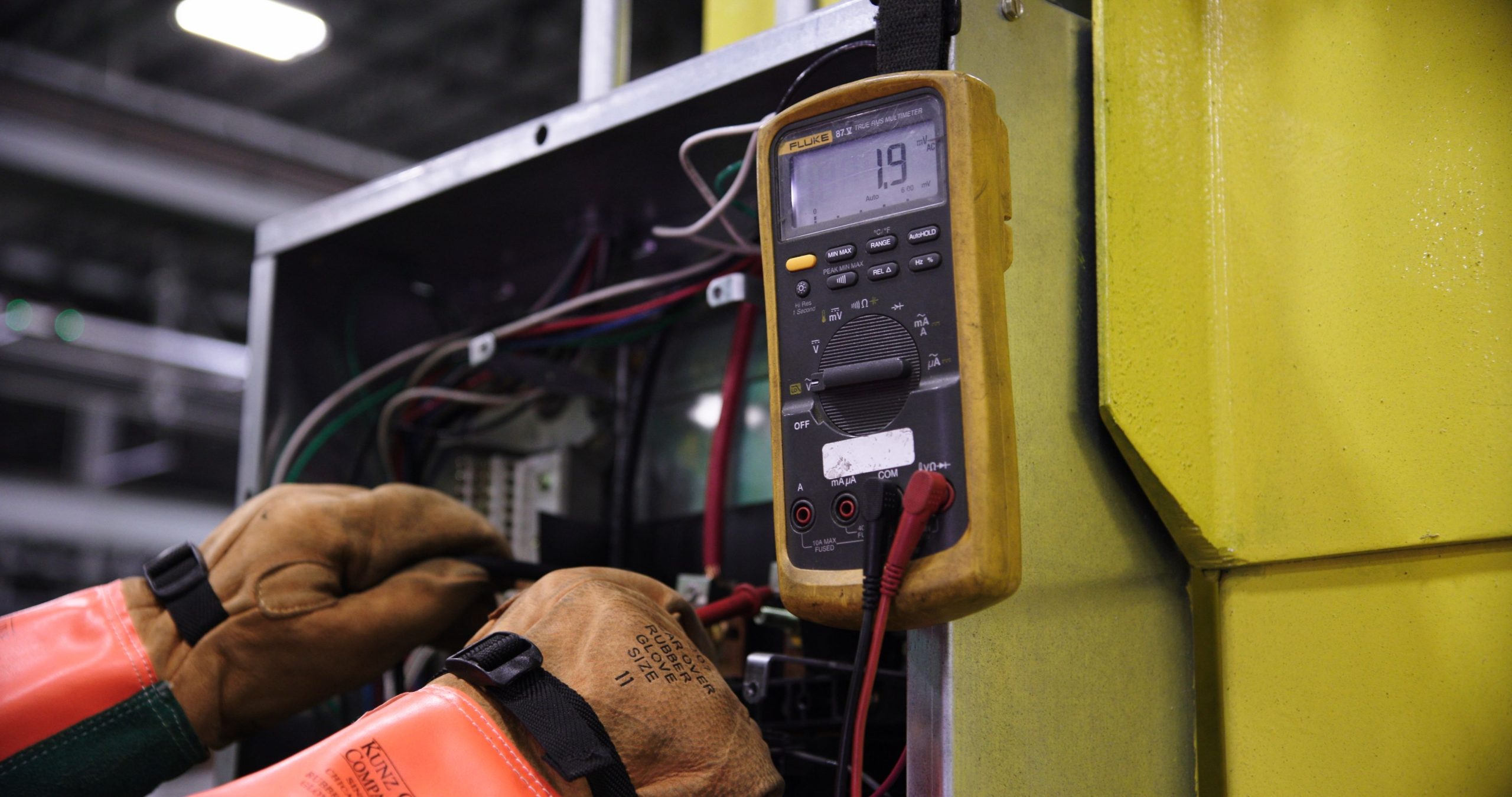
| Provider | Reporting | Services and repairs | Coverage and operations |
|---|---|---|---|
| Jim’s Test & Tag | Publishes detailed reports, next-test reminders and data-management services.[4] | Offers electrical test and tag, PAT and RCD testing, microwave testing, fire equipment, emergency and exit lights, and workplace and vehicle first-aid kits. Electrical-repair capability is not confirmed.[4] | Jim’s says it has more than 200 Australian franchisees. Its downtime practices, local availability and service levels are not confirmed.[4] |
| Appliance Tagging Services (ATS) | Provides results through a secure online portal using an emailed link, login and password. Reminder functionality is not confirmed.[6] | Offers on-site repairs for plugs, sockets, extension leads, IEC leads and power boards. ATS says some repairs may not be completed on site in Queensland.[6] | Its quote form lists the ACT, NSW, Queensland, Northern Territory, Western Australia, South Australia, Victoria and Tasmania. Equipment normally must be switched off, and each item takes several minutes depending on the appliance. Response times are not confirmed.[6] |
Treat these as published capabilities, not contractual promises. Require each provider to confirm the proposed scope, locations, deliverables and service commitments in writing.
Specify the asset register and final report
Make the register a contractual deliverable rather than accepting a general promise of detailed reporting. For each tested asset, require:
- a unique asset identifier and item description;
- the site and specific location;
- the test date, tester identity and tag details;
- pass or fail status and test history;
- the fault, isolation status and repair action; and
- the next required action or scheduled test date.
ATS says records should include a tag showing the date, item, tester and pass or fail status, supported by an asset register, test history and results covering faulty items and repair actions.[6] Jim’s confirms detailed reports, retesting reminders and data management, but its published material does not verify every field listed above.[4]
Test & Tag Training’s guidance says failed equipment should be removed from use and clearly identified as unsafe.[3] Require the register to record this action rather than showing only a failed result.
Both providers should also confirm the export format, data ownership, correction process, migration of existing records and access to reports after contract termination. These terms are not confirmed in the supplied provider material.[4][6]
Plan for downtime and failed equipment
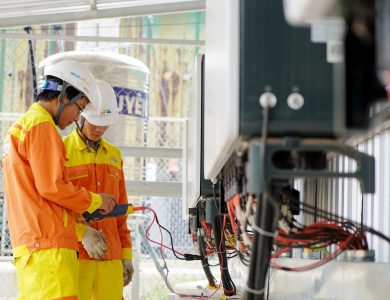
ATS says equipment normally must be switched off and each item may take several minutes, depending on the appliance. After a risk assessment and at the customer’s request, ATS may visually inspect a server without powering it down, but this is a visual-inspection-only exception.[6]
ATS offers on-site repairs for plugs, sockets, extension leads, IEC leads and power boards, although some repairs may not be completed on site in Queensland.[6] Jim’s does not publish comparable electrical-repair or downtime procedures; its published repair detail concerns arranging fire-extinguisher refills or replacements.[4]
Require both quotations to address:
- shutdown windows agreed with site operations;
- exceptions and escalation for critical equipment;
- quarantine, identification and notification of failed items; and
- repair approvals, spending controls and treatment of work outside those controls.
Compare pricing and contract terms
| Provider | Published pricing information | Terms not confirmed |
|---|---|---|
| Jim’s Test & Tag | Offers a free quote. No fixed rate, per-item price, minimum charge or call-out fee is published.[4] | Complete pricing, minimum volumes, travel fees, cancellation terms, response commitments and service warranties.[4] |
| ATS | Says pricing is based on the number of unit tests completed and offers individual quotations. No rate or minimum charge is published.[6] | Complete pricing, minimum volumes, travel or call-out fees, cancellation terms, response commitments and service warranties.[6] |
Ask each bidder to define a test unit and itemise volume bands, minimum invoices, mobilisation, travel, after-hours work, retests, tags, reports, portal access, repairs, replacement parts and GST treatment.
The proposed contract should also state its length, renewal and indexation arrangements, cancellation rights, notice periods, response times, remedies for missed visits, warranties, insurance requirements, subcontracting conditions and asset-data exit arrangements. The provider pages do not confirm these commercial terms.[4][6]
Build schedules around risk and jurisdiction
Do not apply one retest cycle across every site. The cited guidance describes intervals ranging from daily in extreme conditions to monthly, three-monthly, six-monthly, yearly, two-yearly or five-yearly, depending on location, operating environment and risk.[3][6]
Require a site schedule matrix recording:
- the jurisdiction and workplace type;
- the equipment class and operating environment;
- the documented basis for the interval; and
- the person or authority approving the schedule.
The contract should accommodate testing after safety-affecting repair or service, when second-hand equipment enters the workplace, or when no reliable previous test record exists.[1][3]
Published interpretations of legal obligations differ. ATS describes test and tag as legislated across Australia for most businesses, while Test & Tag Training says routine testing of every item may not be required in many lower-risk workplaces.[3][6] Check the legislation, regulations and standards applying to each site rather than relying on either broad statement.
Victorian government-school policy imposes specific register, competency and failed-equipment controls for those workplaces.[2] Queensland Government guidance says test and tag work should be done by a competent person, electrical repairs require the appropriate electrical work licence, and a business carrying out licensed electrical work needs an electrical contractor licence.[7][8] Check the rules separately for each state and verify the provider’s licence and assigned workers’ competency before contracting.
Confirm what testing covers
Test and tag generally combines visual inspection of plug-in equipment, its plug and flexible cord with appropriate electrical tests using a portable appliance tester. Possible tests include earth continuity, insulation resistance, polarity and leakage current.[3][6]
A portable appliance tester does not replace visual inspection. The operator must select suitable tests and interpret the results rather than relying only on the instrument’s pass or fail output.[3]
Proposals should distinguish portable-equipment testing from fixed installations, repairs, specialised equipment and medical electrical equipment, which may need different procedures or appropriately licensed or qualified personnel.[3]
Which provider is the better fit?
Jim’s is the stronger initial candidate where the brief combines electrical testing with fire equipment, emergency and exit lights, and first-aid maintenance.[4] ATS is the stronger initial candidate where priorities include specified record fields, secure online reporting, limited on-site repairs and a documented shutdown process.[6]
Jim’s network claim does not confirm technician availability at each site, and locations listed on ATS’s quote form do not establish response times.[4][6] Ask both providers for sample reports, site-level staffing and coverage plans, relevant references and firm service commitments.
Score bids against:
- record completeness and data portability;
- risk- and jurisdiction-based scheduling;
- downtime and exception planning;
- repair authorisations and controls;
- local service capacity;
- commercial transparency; and
- renewal, cancellation and exit arrangements.
Public information alone is insufficient for a final selection. Complete pricing, minimum charges, performance commitments, contract duration, cancellation rights and warranties remain unverified.[4][6]
Run a controlled trial before rollout
For a multi-site contract, consider a pilot at a representative workplace. Agree the asset list, testing schedule, shutdown window, exception process and acceptance criteria in advance.
- Request sample reports, tags, failure notices, repair records and usable data exports from both bidders.
- Verify the assigned workers’ credentials, relevant licences and insurance documents.
- Measure missing assets, duplicate records, failed-item escalation, downtime, repair approvals and final-register accuracy.
Any rollout conditions and correction obligations must be negotiated because the provider pages do not confirm them as standard contract terms.[4][6] References