HROUS
Hydrostatic testing for US facilities: test-or-replace process
Before sending workplace extinguishers for hydrostatic testing, separate the mandatory testing, protection and certification duties from the contractor arrangements you need to negotiate. OSHA’s rule covers portable extinguishers provided for employee use, and the employer remains responsible for inspection, maintenance and testing. [2]
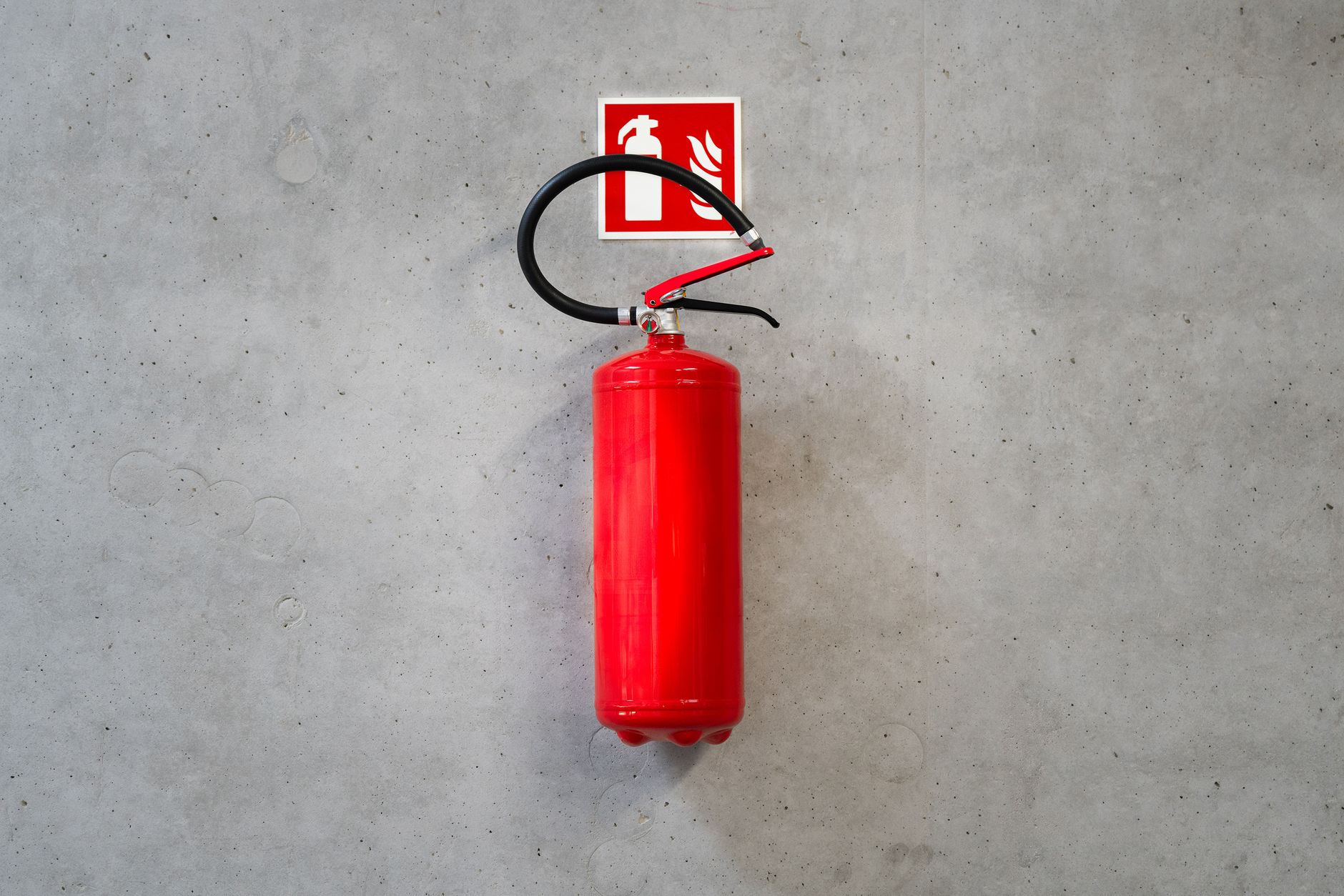
- Required: Identify applicable test deadlines, remove prohibited or unfit units, and use trained testers with suitable equipment and facilities. [2]
- Required: Provide alternate equivalent protection when extinguishers are removed for maintenance or recharging, and retain unit-specific hydrostatic-test certification. [2]
- Recommended arrangements: Agree on a unit-level work list, rejection evidence, fees, turnaround, replacement approvals and handoff documents.
1. Separate test candidates from units that must leave service
A scheduled test date is not the only trigger. New corrosion or mechanical injury can require hydrostatic testing before the normal interval, but certain conditions exclude a unit from ordinary interval testing. [2] Flag these for contractor assessment rather than authorizing a routine test:
- Repairs made by soldering, welding, brazing or patching compounds. [2]
- Damaged cylinder or shell threads. [2]
- Corrosion that has caused pitting, including beneath removable nameplate assemblies. [2]
- Evidence the extinguisher has been burned in a fire. [2]
- A stainless-steel shell that has contained calcium-chloride extinguishing agent. [2]
OSHA’s hydrostatic-testing eTool identifies possible heat exposure through charred, blistered or discolored paint or labels; a distorted cylinder body; melted components; or activation of the pressure-relief device. [1] Obtain a contractor assessment rather than attempting cylinder testing.
Some units must leave service, not enter the routine test queue. Any shell, cylinder or cartridge that fails hydrostatic testing or is unfit for testing must be removed from service and from the workplace. [2] Copper or brass shells joined by soft solder or rivets are prohibited from hydrostatic testing and had a removal deadline of January 1, 1982. [2] OSHA also requires removal of specified soldered- or riveted-shell designs activated by inversion: self-generating soda-acid and foam extinguishers, and gas-cartridge water extinguishers. [2][3]
For each rejected unit, request an explanation linked to its serial number or other identifier: the observed defect, applicable rejection criterion, photographs or examination findings where available, and whether rejection preceded testing or followed a failed test. Treat this as a purchasing and audit control, not an OSHA-prescribed condemnation form.
2. Match eligible cylinders to the correct deadline
Monthly visual inspections, annual maintenance and hydrostatic testing are separate duties; a maintenance visit does not replace a cylinder test. Hydrostatic testing requires trained persons, suitable equipment and facilities, and external and internal examination of the cylinder or shell. [2]
OSHA’s eTool identifies soda acid extinguishers with stainless-steel shells and cartridge-operated water and/or antifreeze extinguishers as obsolete, although they remain in Table L-1. For eligible units, match the agent, operating method and shell construction to OSHA’s Table L-1, then compare the last documented test date with the applicable interval: [2][3]
- Five years: soda acid with a stainless-steel shell; cartridge-operated water and/or antifreeze; stored-pressure water and/or antifreeze; wetting agent; foam with a stainless-steel shell; Aqueous Film Forming Foam (AFFF); loaded stream; dry chemical with a stainless-steel shell; and carbon dioxide. [2]
- 12 years: stored-pressure dry chemical with mild-steel, brazed-brass or aluminum shells; cartridge- or cylinder-operated dry chemical with mild-steel shells; Halon 1211; Halon 1301; and cartridge- or cylinder-operated dry powder with mild-steel shells. [2]
“Dry chemical” alone is not enough to assign a deadline: stainless-steel shells require five-year testing, while the specified dry-chemical configurations above require 12-year testing. [2]
Keep the separate six-year maintenance requirement for stored-pressure dry-chemical extinguishers requiring 12-year hydrostatic testing, except those with non-refillable disposable containers, on your schedule; recharging or hydrostatic testing restarts that maintenance period. [2]
OSHA requires carbon dioxide extinguishers and nitrogen or carbon dioxide cylinders used with wheeled extinguishers to be tested every five years at 5/3 of the service pressure stamped into the cylinder, subject to the nitrogen-cylinder exception below. [2] OSHA permits 10 years for nitrogen cylinders meeting the condition cited in 29 CFR 1910.157(f)(10), referencing 49 CFR 173.34(e)(15)—not as a general extinguisher interval. OSHA requires shut-off-nozzle hose assemblies to be tested at the extinguisher’s interval: carbon dioxide assemblies at 1,250 psi (8,620 kPa), and dry chemical and dry powder assemblies at 300 psi (2,070 kPa). Hose assemblies for carbon dioxide extinguishers that require a hydrostatic test must be tested within a protective cage device. [1][2]
Optional inventory fields: unit identifier; location; agent; cylinder construction; last documented test; applicable interval; condition disposition; proposed next action. Use these to check the contractor’s proposed scope. If identification or prior certification is missing, request a documented basis for the next action rather than assuming a substitute date.
3. Verify temporary protection before pickup
OSHA does not prescribe one-for-one loaners or an automatic contractor obligation to supply them. [2][3]
Before approving pickup, identify affected locations and hazards, review proposed substitutes, and check coverage along travel routes—not just the total loaner count. OSHA requires selection and distribution to reflect anticipated fire hazards. [2]
Check temporary coverage against these distribution requirements:
- Class A: Travel distance to an extinguisher must be no more than 75 feet. [2]
- Class B: Travel distance from the Class B hazard area to an extinguisher must be no more than 50 feet. [2]
- Class C: Distribution follows the appropriate Class A or Class B pattern. [2]
- Class D: Suitable extinguishing agent must be within 75 feet of travel distance from the combustible-metal working area where combustible-metal powders, flakes, shavings or similarly sized products are generated at least once every two weeks. [2]
Temporary extinguishers must also be fully charged, operable and in their designated places except during use. [2]
Example: Replacing an appropriate Class B extinguisher with a loaner lacking suitable Class B protection preserves the count but not the affected location’s hazard coverage. Check both hazard suitability and travel distance when assessing equivalent protection. [2]
As an optional coordination control, record temporary locations, coverage dates, facility and contractor contacts, and the contingency if service runs longer than expected. Agree who will supply, place and retrieve substitutes, and who will maintain coverage during a delay.
4. Agree the scope, fees and approval checkpoints
Put the service scope and spending limits in writing before authorizing work. Contractor paperwork does not transfer the employer’s responsibility for workplace extinguisher inspection, maintenance and testing. [2]
Confirm the compliance deliverables
- Testing capability: Ask for written confirmation of trained personnel, suitable facilities, internal and external examination, and OSHA-compliant equipment; OSHA specifies water-jacket equipment for compressed-gas cylinders with an expansion indicator accurate within 1 percent of total expansion or .1cc (.1mL) of liquid. For non-compressed-gas cylinders, OSHA specifies a hydrostatic test pump capable of at least 150 percent of the test pressure, with appropriate check valves and fittings. [2][3]
- Hose work: Include applicable shut-off-nozzle hose testing at the extinguisher’s interval. [2]
- Protection and records: Confirm how the arrangement will support alternate equivalent protection during removal for maintenance or recharging and delivery of required hydrostatic-test certification. [2]
Request commercial terms separately
- Unit-level work list: Request each identifier, proposed test-or-replace disposition, applicable hose work and the reason for any proposed replacement.
- Itemized quote: Ask which charges apply for testing, examination or rejection, maintenance or recharge, replacement units, temporary equipment, pickup and delivery, and disposal if offered.
- Schedule: Agree on pickup, expected turnaround, temporary-equipment duration, delay notification and the plan for units that fail or cannot be tested.
- Replacement approval: Require identifier-linked rejection evidence and purchasing approval before chargeable replacement work. Keep this internal spending checkpoint separate from the required removal of unsafe equipment.
- Handoff documents: Request an outgoing inventory or manifest, temporary-equipment list, written quote and agreed return-document deliverables.
Agree on charges, turnaround, temporary-equipment arrangements and handoff documents directly with the contractor rather than treating them as regulatory entitlements under the OSHA requirements described above. [1][2][3]
5. Reconcile returned cylinders, records and markings
Compare returned identifiers with the outgoing inventory, accounting separately for tested returns, replacements and rejected units. Use a reconciliation sheet as an administrative control. For rejected cylinders, obtain the unit-specific explanation and reconcile the replacement decision rather than closing the work order on the return count alone.
Match certification to the physical unit
OSHA requires each tested extinguisher’s certification record to contain: [2]
- The test date. [2]
- The signature of the person who performed the test. [2]
- The extinguisher serial number or other identifier. [2]
Match the record’s identifier to the returned extinguisher. A generic invoice or fleet-wide “testing completed” statement does not supply the required evidence unless it includes those fields for each tested extinguisher. [2]
Illustrative record: Extinguisher identifier: FAC-CO2-A; test date: the actual test date; tester signature: the performing tester’s signature. Compare the identifier with the physical unit. A separate operational entry could record its location, contractor name, result and replacement cross-reference.
Keep those operational fields distinct from OSHA’s mandatory certification fields; they do not replace the required date, signature and identifier. [2]
Retain certification until the extinguisher is hydrostatically retested at the Table L-1 interval or removed from service, whichever occurs first, and provide it to the Assistant Secretary upon request. [2][3]
Check equipment-specific markings
- OSHA regulation: Check the mandatory certification separately from physical markings. The record must identify the tested extinguisher. [2]
- OSHA explanatory guidance: The hydrostatic-testing eTool additionally describes identifying the person or agency that performed the last test and securely fixing that information to the extinguisher. [1]
- High-pressure-cylinder guidance: Minnesota Department of Health guidance states that passing high-pressure cylinders, such as CO2 cylinders, must bear the tester’s identification number and test month/year stamps under NFPA 10(10), §8.7.3. Treat this as equipment-specific guidance, not a universal marking rule for every US facility. [4]
A passing shut-off-nozzle hose assembly does not require a separate record or stamp under OSHA’s hose provision, so an absent hose stamp alone is not a discrepancy. [2]
Towing vessels have a separate inspection, testing, marking and records framework under 46 CFR 142.240, including vessel-specific retention provisions; do not import those provisions into ordinary facility procedures. [5]
Close out the work order
Resolve missing signatures, identifier mismatches, unexplained substitutions and unclear marking applicability with the contractor. Before closing the work order:
- Account for outgoing units, including rejected cylinders and authorized replacements.
- Verify each tested extinguisher’s certification and applicable markings. [1][2][4]
- Restore fully charged, operable extinguishers to their designated places, maintaining equivalent protection through the changeover. [2]
- Update the maintenance and hydrostatic-test schedule to track the recurring duties. [2]
References
- eTool : Evacuation Plans and Procedures – Emergency Standards – Portable Fire Extinguishers – Hydrostatic Testing | Occupational Safety and Health Administration (osha.gov)
- 1910.157 – Portable fire extinguishers. | Occupational Safety and Health Administration (osha.gov)
- eTool : Evacuation Plans and Procedures – Emergency Standards – Portable Fire Extinguishers – OSHA Requirements | Occupational Safety and Health Administration (osha.gov)
- MAINTENANCE AND TESTING OF PORTABLE FIRE EXTINGUISHERS Introduction (mn.us)
- 46 CFR § 142.240 – Inspection, testing, maintenance, and records. | Electronic Code of Federal Regulations (e-CFR) | US Law | LII / Legal Information Institute (cornell.edu)