HROUS
Bespoke Wedding Veils for UK Brides: Compare Before You Commit
Can a ready-made veil suit your existing gown?
Yes—start with a ready-made veil if its fabric, attachment and finished length suit the gown; consider bespoke when the available specification falls short. Britten recommends choosing length with the gown’s train in mind and describes several attachment styles.[6]
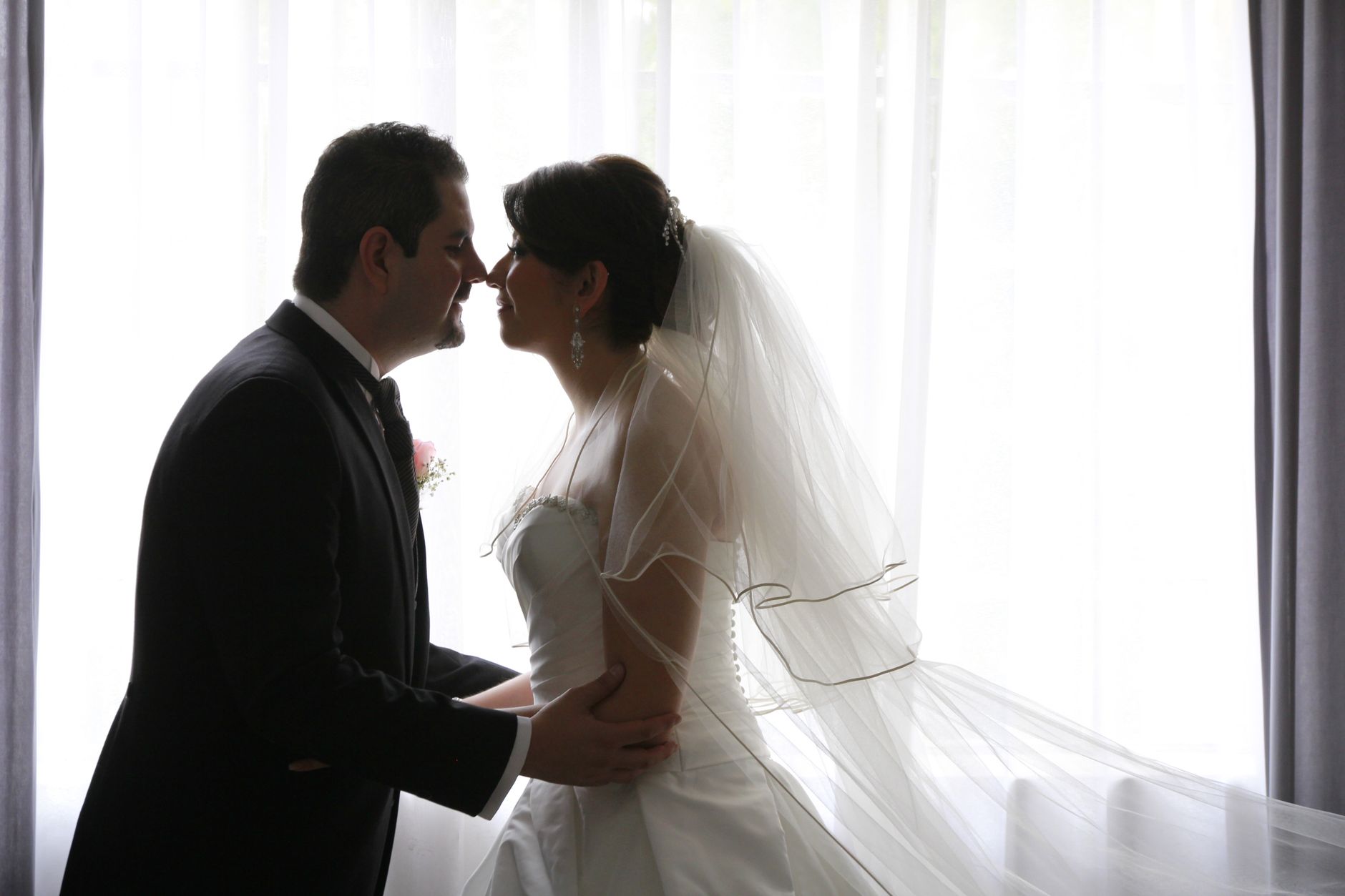
Start with fabric, not the colour name. Britten warns that “ivory” varies between manufacturers and recommends comparing tulle samples directly with the gown; it also suggests pairing a heavily embellished dress with a simple veil.[6] Hold physical swatches against the dress under the same lighting conditions. Tania Maras’s vendor-authored guide cautions that online viewing cannot provide an in-person assessment of softness, weight, movement or drape.[5]
Keep ready-made, made-to-order and bespoke separate when shopping. Rebecca Andrews describes all its veils as handmade to order, so an existing catalogue design is not necessarily a stock item.[3] Check the particular purchase’s availability and returns terms rather than relying on its label.
Compare price, swatches and lead time
Bespoke Veils
Published price: £250–£1,000+, depending on length, style and embroidery complexity.[1]
Swatch arrangements: The FAQ describes tulle choices covering colour, fibre, finish and structure, alongside design sampling.[1] Ask whether physical swatches can be posted and what they cost.
Production timing: Generally 8–10 weeks, varying with the season and existing orders; rush work is sometimes possible if capacity allows.[1] The separate 2–7 days for embroidery and making is part of that process, not the turnaround from enquiry to finished veil.[1]
Rebecca Andrews Bridal
Published price: Recent bespoke designs range from £385–£895+, rather than a fixed service price. Rebecca Andrews’ individual quote gives the total cost including fabric, hair comb, postage and requested embellishments.[2] Overseas customers are responsible for additional shipping costs, VAT, customs and excise duties; non-payment may cause delays, and customers should contact Rebecca Andrews before ordering to calculate overseas shipping fees.[3]
Swatch arrangements: Following the booking payment, up to five sourced fabric, appliqué or lace samples are posted for selection; additional swatches cost £4 each.[2]
Production timing: Twelve weeks for bespoke, with limited bookings.[2] Work begins after final design selection and cleared production payment.[2] Rebecca Andrews separately quotes four weeks for its standard made-to-order veils.[3]
Blossom & Bluebird
Published price: Bespoke work is individually quoted in line with comparable shop styles and lengths, rather than offered at a fixed bespoke price.[4]
Swatch arrangements: Curated physical fabric samples are available to purchase for comparison against the gown.[4] Ask for the sample cost before proceeding.
Production timing: The solo maker normally accepts one or two custom orders each month, and the calendar may fill several months ahead. Creation takes “a few weeks” after payment triggers sourcing and hand-stitching.[4] Request an end-to-end schedule, not an enquiry-to-arrival estimate based on that phrase.
The services differ. Bespoke Veils creates embroidered veils from start to finish and will not embroider a ready-made veil.[1] Rebecca Andrews offers sourced lace, appliqué, embroidery and embellishment for bespoke veils.[2] Blossom & Bluebird offers hand-stitched custom work but currently excludes custom embroidery.[4]
For Bespoke Veils, small motifs start at £250; personalised initials and dates at £295; script at £325; borders at £375; and designs covering the base and extending upwards at £550. Borders extending to the fingertips or beyond typically cost £450–£600.[1] Rebecca Andrews lists embroidery from £65 for two embroidered initials and asks customers to contact it for the current embroidery price list and lead times.[2]
Use these figures to shortlist, then give each maker the date you need the veil in hand for your fitting.
Check payments, returns and cancellation
Before paying, separate three questions: what happens if you approve the wrong colour or length, if you later cancel, or if the delivered veil is faulty or differs from the agreed specification?
-
Bespoke Veils. The cited FAQ does not state a payment schedule, cancellation or change rules, a return/refund policy or a fault-reporting deadline.[1] Request written terms covering what each payment buys, when it becomes committed, available changes and how problems are resolved.
-
Rebecca Andrews Bridal. A 20% payment secures the booking and covers initial research, fabric swatches and postage. After final design selection, a 50% production deposit becomes payable; work starts once payment clears.[2] Request a pounds-and-pence schedule showing whether the 50% includes the earlier 20% or is additional to it. Completion images are sent before dispatch, and the remaining balance is payable before posting, with deposits already paid deducted.[2]
Rebecca Andrews does not accept returns or exchanges when the customer orders the wrong colour or length, and recommends accurate measurements and a fabric swatch before ordering.[3] Ask for cancellation terms, refund timing, the change cut-off after approval and the remedy offered for a fault or departure from the agreed specification.
-
Blossom & Bluebird. There is no deposit or upfront bespoke-service charge; optional curated fabric samples are the only initial cost.[4] Once details and the quotation are agreed, payment through a private shop link triggers fabric sourcing and hand-stitching. Bespoke commissions are final sale, with no returns or exchanges.[4] Request terms for cancellation before production and for handling a fault or departure from the agreed specification.
Ask for a separate answer to each scenario, rather than accepting a general reference to “bespoke returns”. Keep the maker’s response with the quotation and approved specification.
Turn a long train into an agreed measurement
For a gown with a long train, decide whether the veil should finish before, level with or beyond the train, then ask the maker to translate that choice into a finished measurement. Britten advises considering the gown’s train, comfort and venue size when choosing length.[6]
Send front-and-back gown photographs, as Blossom & Bluebird requests; other angles and a short video can provide useful reference, as Tania Maras recommends.[4][5] Add an annotated sketch showing the proposed attachment point, gown-train edge and desired veil hem. Ask the maker to approve that interpretation.
Agree these details rather than approving a style name alone:
- Hair and attachment: record the planned hairstyle, fixing position and whether the veil uses a comb, pins or another agreed fixing.
- Measurement points: ask the maker to mark precisely where the measurement begins and ends.
- Finished back length: record the dimension and unit, not simply “cathedral” or “long”.
- Meaning of the length: ask whether it means comb-to-hem, includes a blusher or describes extra length beyond the gown’s train. Do not treat those measurements as interchangeable.
- Blusher: record its length separately, if included, and assess it against bouquet position and your height, following Britten’s guidance.[6]
Rebecca Andrews asks customers to provide accurate measurements; Blossom & Bluebird says length can be settled collaboratively during design.[2][3][4] Ask Bespoke Veils for its preferred measuring method. The cited FAQ does not give a measurement protocol.[1]
With Rebecca Andrews’ incorrect-length restriction in mind, obtain written acceptance of the measurement rather than relying on photographs alone.[3] A concise approval request could read:
“Please confirm the veil’s attachment position and fixing method, along with its finished back length, measurement start and end points, and units. Please confirm the separate blusher length or state that it is not applicable. With the gown’s train laid out, please confirm where the intended veil hem finishes relative to the train. Please approve the attached annotated sketch as the measurement reference.”
Resolve any difference between the sketch and the quoted dimensions before approving production.
Work backwards from the fitting date
Give the maker the date the veil must be in hand for your dress fitting, as well as the wedding date. Ask whether they can agree to that earlier receipt date in writing—not simply complete the veil before the wedding.
The published lead times are starting points, not an individual booking confirmation. Bespoke Veils says its timing varies with season and existing orders; Rebecca Andrews limits bespoke bookings; Blossom & Bluebird may be booked several months ahead.[1][2][4]
Build the schedule backwards, asking the maker to agree dates or explicit windows for each stage:
- Fitting receipt deadline: the latest date the veil must reach you.
- Dispatch and delivery allowance: record these separately rather than treating posting as arrival.
- Completion and image review: allow for any approval and final payment before dispatch. Rebecca Andrews sends completion images of bespoke veils and requires the remaining balance before posting.[2]
- Production and cleared payment: identify the available start date and the payment needed to release the work.
- Final approval, samples and consultation: work back through these stages, including time to compare samples against the gown.
Ask what happens to the schedule if samples or your approval are delayed, and whether a missed fitting deadline changes the agreed purchase terms. Keep a gown-fitting appointment separate from any appointment offered by the veil maker; request details of fitting arrangements rather than assuming one is included.
Bespoke Veils includes UK postage by Royal Mail’s tracked, signed-for, next-working-day service, insured to the order’s full value.[1] Blossom & Bluebird includes tracked delivery for bespoke orders and offers an Express Shipping upgrade when issuing the order confirmation.[4] Ask each maker to distinguish the expected receipt date from the dispatch date.
Approve one written specification before production
Bring the quote, sample choice, measurement record and schedule into one approval document. Give it a version or date so the maker can confirm which specification will be produced.
- Fabric: approved physical swatch reference, material, colour and date compared against the gown.
- Design: edge treatment, lace or embroidery placement, embellishments and approved image reference.
- Attachment: fixing type, size, colour and position.
- Finished measurements: agreed length and width, units, start and end points, separate blusher length and intended position relative to the gown’s train. Attach the approved sketch.
- Total and payments: price including delivery, payment amounts and due dates, and agreed cancellation terms before and after production begins.
- Fitting-led schedule: approval deadline, production start, completion, dispatch and agreed receipt date.
Ask explicitly: “What event commits my order to production? What is my last opportunity to change colour, length, attachment or decoration? What additional charge or revised delivery date would an amendment mean?”
Rebecca Andrews starts bespoke work after the production payment clears; Blossom & Bluebird sources fabric and starts stitching bespoke veils after payment.[2][4] Bespoke Veils’ cited FAQ does not state a change cut-off, so request one in writing.[1] Have the final dimensions and swatch choice settled before the maker reaches the agreed commitment point.
Keep fault handling separate from wrong-choice returns. Rebecca Andrews accepts returns for faults reported within seven days of delivery, while Blossom & Bluebird’s final-sale wording does not explain how a fault would be resolved.[3][4] Request the contact route, evidence needed, reporting deadline and proposed remedy, then retain that response with the order.
Choose ready-made when its verified specification and applicable terms meet your needs. Commission bespoke when the maker confirms the design, total price, measurable dimensions and fitting-led schedule. If a critical detail remains unanswered, pause before approving production.
References
- Bespoke Veils | Anne-Marie Prescott | FAQ (bespokeveils.co.uk)
- Custom & Bespoke Wedding Veils | Rebecca Andrews Bridal (rebeccaandrewsbridal.co.uk, 2024)
- Can I return my veil? | Rebecca Andrews Bridal (rebeccaandrewsbridal.co.uk, 2024)
- Bespoke Wedding Veils | Luxury custom bridal veils, made in England – Blossom & Bluebird (blossomandbluebird.co.uk)
- The pros and cons of buying your wedding veil with your dress | Tania Maras (taniamaras.com)
- Wedding Veil Guide 2026 | Types, Styles, Lengths & How to Choose (brittenweddings.com)